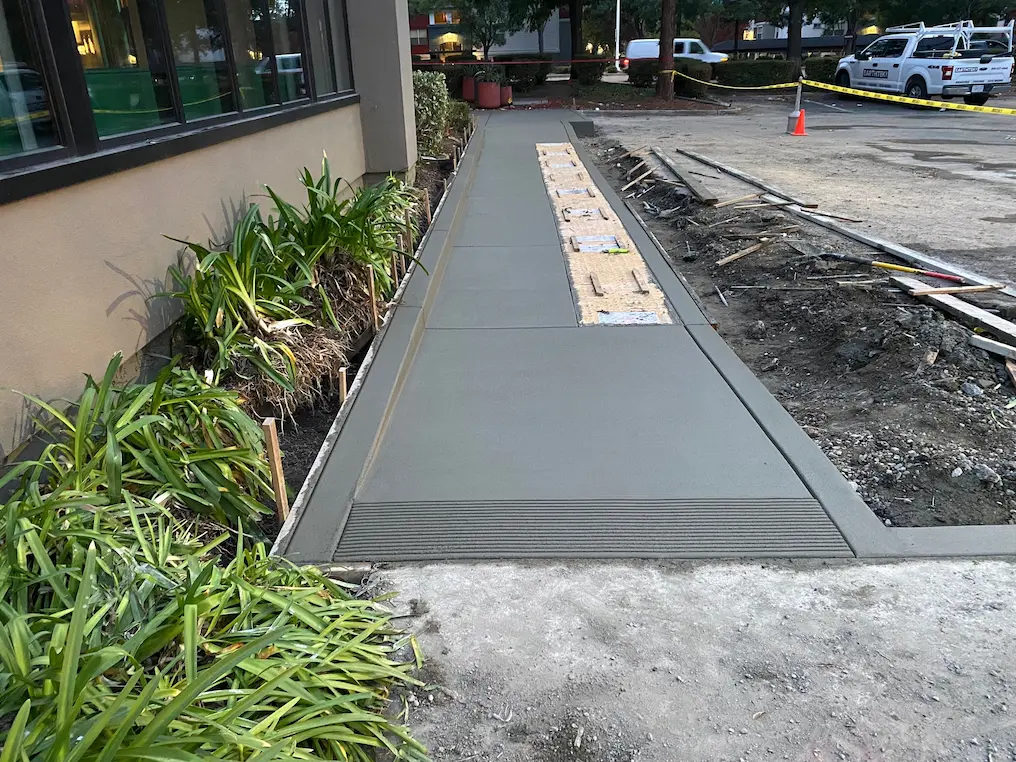
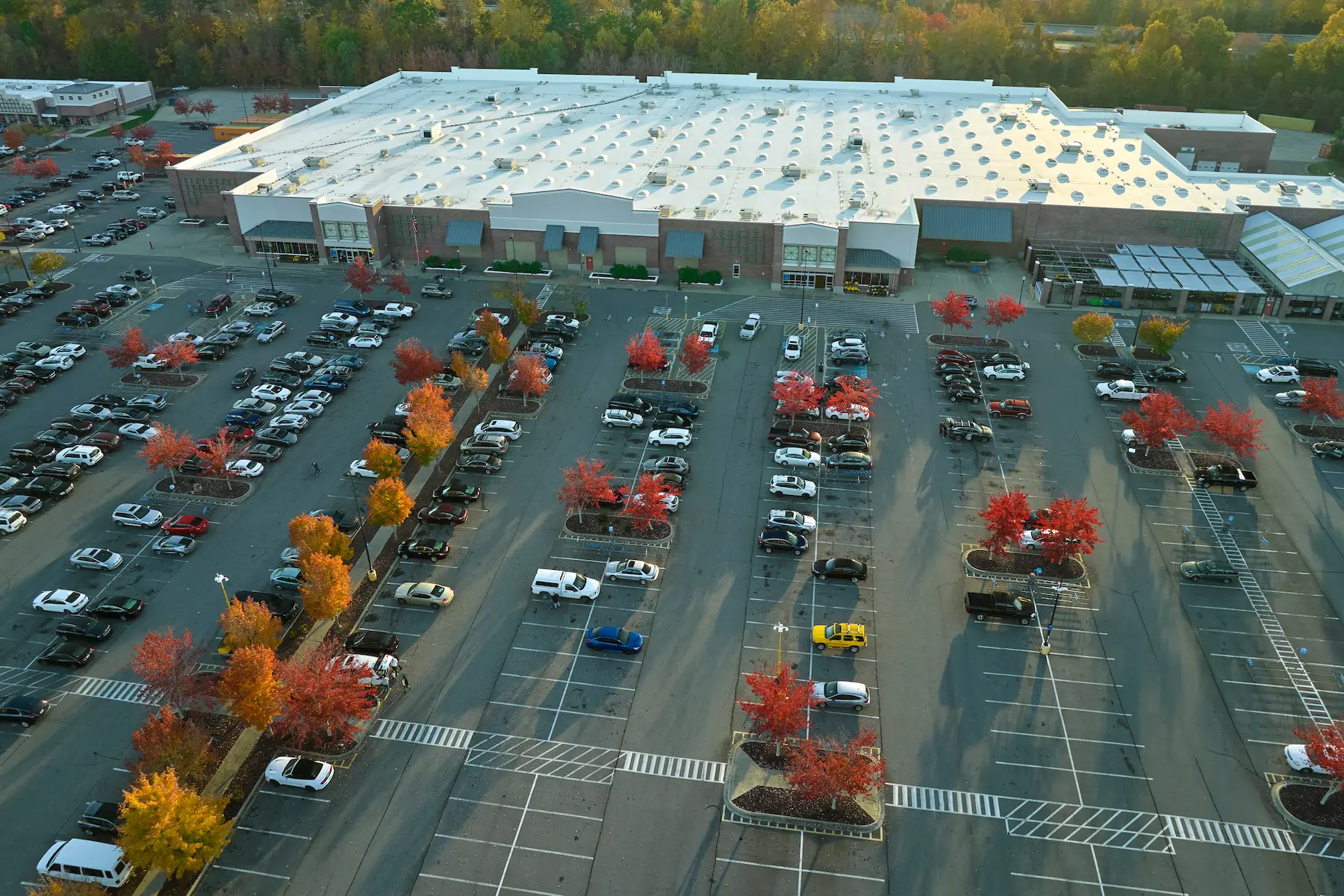
A sidewalk repair affects more than a damaged section of concrete. Customers, employees and deliveries may all use the same route. Before work begins, decide how people will reach the building and who will communicate changes.
Identify the affected route
Walk the area with your facilities team and note entrances, accessible parking, ramps, crosswalks and delivery paths. Photograph uneven panels, cracks and drainage concerns. Mark the work area on a site plan and explain which entrances must stay open.
Ask the contractor to inspect the cause. Tree roots, settlement, drainage and damaged joints may call for different responses. A surface-level repair does not necessarily address movement beneath a panel.
Compare grinding and replacement
Grinding removes concrete from a raised edge to create a smoother transition. It may be an option for an isolated height difference when the slab is sound and the movement has stopped. Because it treats the surface, it will not fix a void, drainage problem or root that is still lifting the panel.
Replacement may be a better fit for a broken or unstable slab, widespread damage, recurring movement or a repair that needs work below the concrete. The scope may also need to address the base, drainage or nearby roots. Ask the contractor to explain which conditions can be corrected and what could cause the problem to return.
Compare the amount of work, disruption and access required for each option. Grinding may involve less disruption for a suitable small repair; replacement involves removing and installing concrete and allowing it to reach the condition needed for use. The contractor should assess the site and confirm the reopening plan. Neither method automatically makes the whole route accessible.
Agree on an accessible route
Before barriers go up, review the route from parking and site arrival points to the entrance with a qualified professional. Decide where temporary signs, barriers and any alternate entrance belong. Test the route in the context of the property, including door access and changes in level.
The U.S. Department of Justice advises businesses to keep accessible features usable and address temporary interruptions promptly. Site-specific federal, California and local rules may apply. Discuss the plan with the project designer or authority where required.
Plan work and reopening together
Agree on the work window, tenant notice, delivery access and who is responsible for barriers. Ask what weather or material conditions could affect the schedule. The contractor should confirm when the repaired area is ready for pedestrian use; avoid assuming a fixed cure time.
Questions to include in the work order
Ask which sections are included, what method is proposed, whether the underlying cause is addressed, and how adjoining pavement will be restored. Request the plan for dust and debris, changes discovered after removal, inspections and communication before reopening.
Frequently asked questions
Can a business stay open during sidewalk repair?
Often the work can be phased, but access depends on the site and repair. Agree on safe routes and operating hours before scheduling.
Is grinding always the best option?
No. The slab’s condition, underlying movement and applicable requirements all affect the choice. Ask for an assessment and a written explanation.