Industrial Asphalt Paving & Sealcoating Project
Project Overview
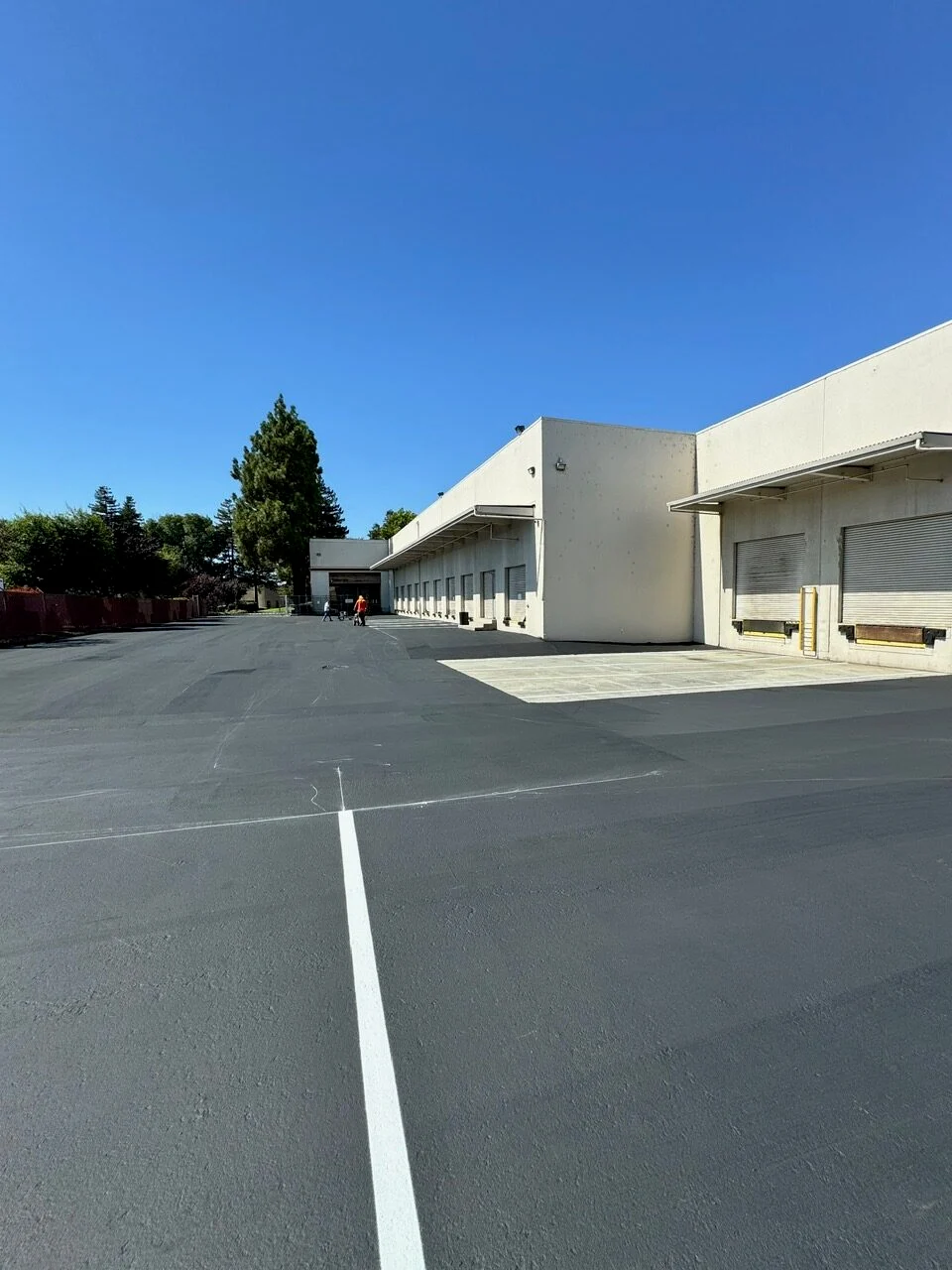
EARTHTEK Paving and Grinding Inc completed this industrial paving project to deliver a long-lasting asphalt surface built for heavy-duty traffic and daily operational demands. Our crew installed durable commercial-grade asphalt, applied protective sealcoating, and finished with clearly marked parking lot striping — keeping trucks, equipment, and employees moving safely.
Industrial facilities put pavement through more punishment than almost any other property type: loaded semi-trucks, forklifts, heavy equipment, tight turning radiuses, and constant daily traffic. A properly engineered asphalt section — protected with sealcoating and organized with high-visibility striping — is what keeps an industrial site operational, safe, and compliant year after year.
Scope of Work
- Industrial asphalt paving installation
- Protective sealcoating application
- Parking lot striping and pavement markings
Why This Project Was Needed
Industrial pavement failure isn't just an eyesore — it slows operations and creates real liability. Common warning signs include:
- Rutting and depressions — heavy truck traffic deforms under-built pavement, creating standing water and rough travel lanes
- Alligator cracking and potholes — signals base failure; potholes damage trucks, forklifts, and freight
- Oxidized, gray asphalt — unsealed pavement dries out, becomes brittle, and cracks faster under UV exposure
- Fuel and oil deterioration — diesel, hydraulic fluid, and oil spills dissolve unprotected asphalt binder in loading and staging areas
- Faded or missing striping — unclear truck lanes, dock approaches, and pedestrian walkways create traffic conflicts and OSHA safety concerns
- Poor drainage — ponding water accelerates pavement failure and creates hazards for workers and equipment
Our Industrial Asphalt Paving Process
- Site evaluation & traffic analysis — Assess existing pavement condition and the loads it must carry (truck counts, axle weights, forklift traffic) to engineer the right pavement thickness; schedule phased work to keep the facility operational.
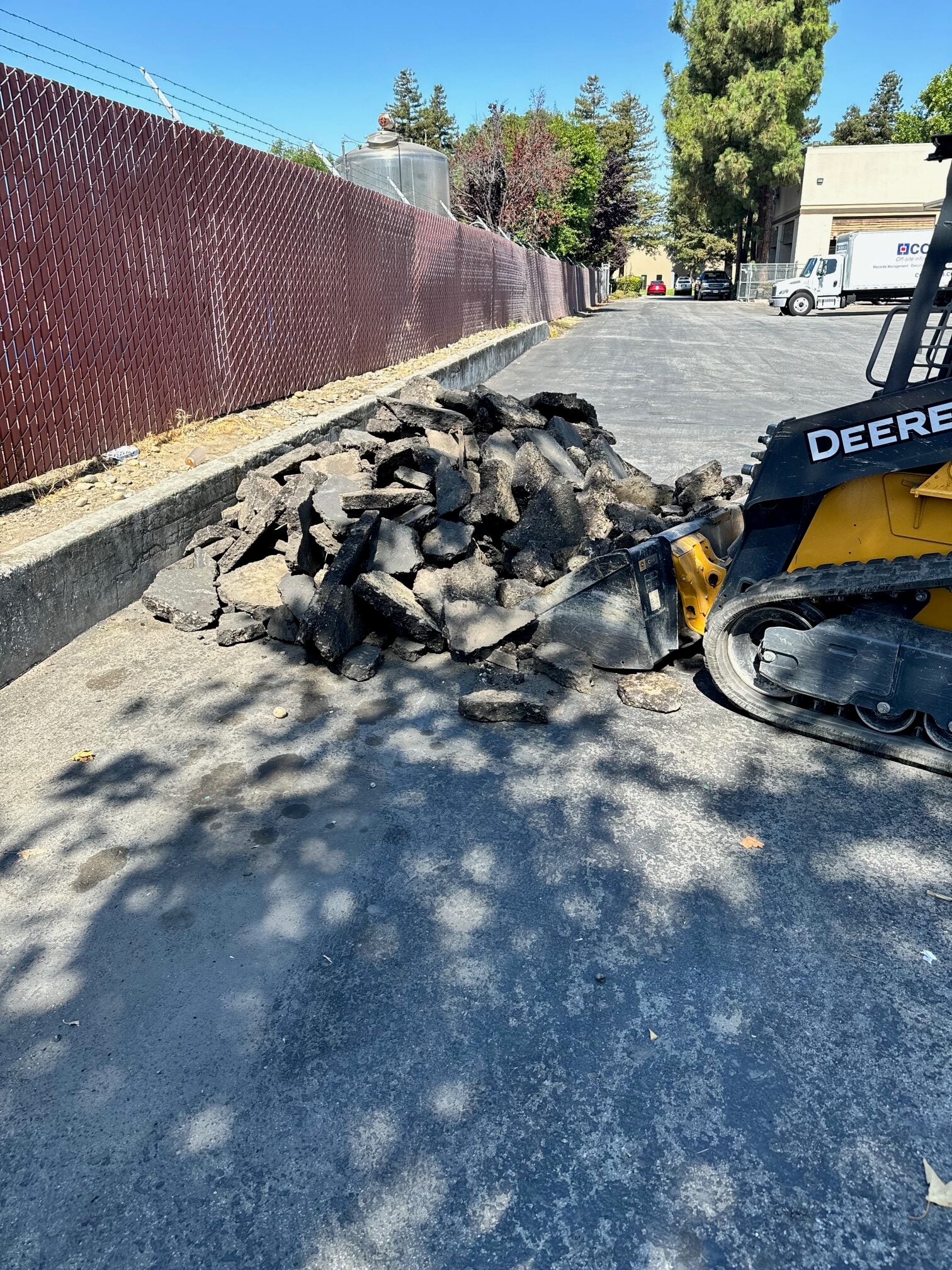
- Demolition & removal — Mill or excavate failed asphalt and haul it away, often recycling it as reclaimed asphalt pavement (RAP).
- Grading & sloping — Shape the sub-surface to direct water runoff away from buildings, loading docks, and travel lanes — drainage is the #1 factor in pavement lifespan.
- Sub-base preparation — Install and compact heavy-duty aggregate base rock deep enough to support loaded semi-trucks and equipment.
- Proof roll & repairs — Run a loaded truck over the sub-base to detect soft spots; undercut and repair weak areas before paving.
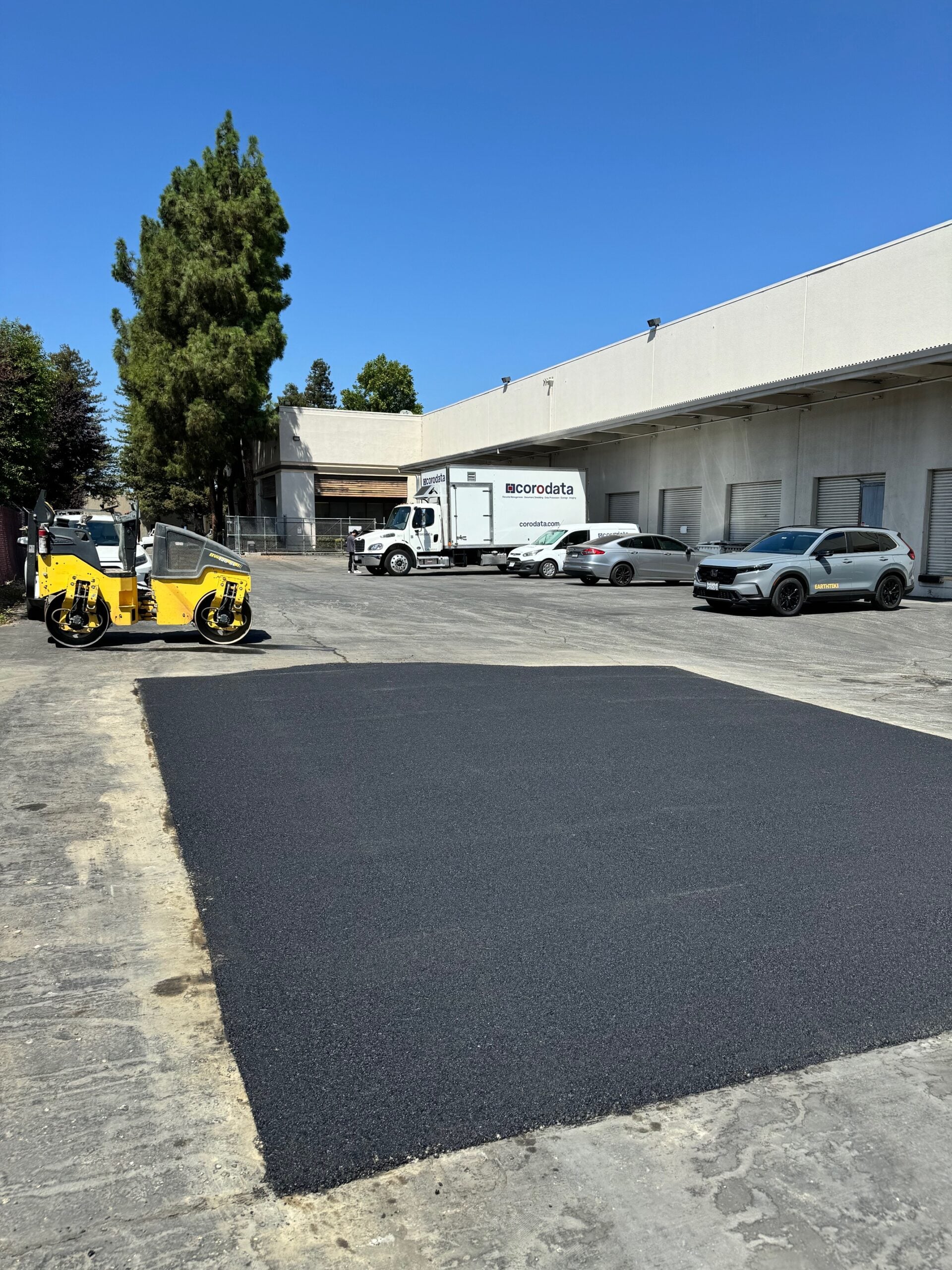
- Binder course installation — Lay a thick lower asphalt layer with larger aggregate for maximum structural strength under heavy loads.
- Surface course paving — Install the smooth top layer of hot mix asphalt with a paver at even depth and grade.
- Compaction — Compact each layer with vibratory and finish rollers while hot to achieve the high density heavy-duty pavement requires.
- Transitions & cleanup — Blend joints at dock approaches, concrete aprons, drains, and existing pavement; clean the site and allow cure time before reopening.
Our Sealcoating Process
- Surface preparation — Clean the pavement of dirt, debris, and vegetation; treat oil and fuel spots with a primer so sealant bonds properly.
- Crack filling — Fill cracks with hot rubberized crack sealant to keep water out of the base before sealing.
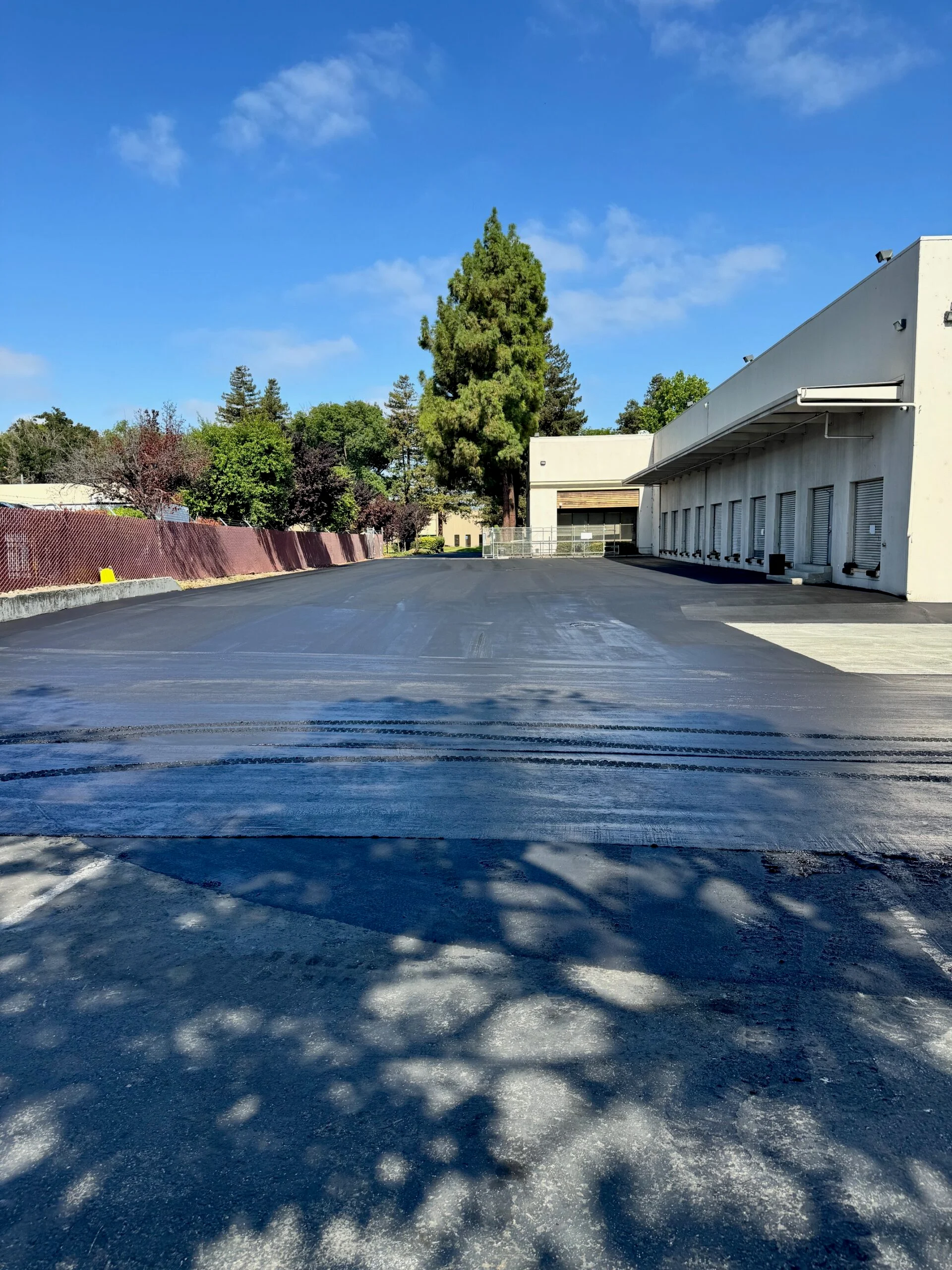
- Sealcoat application — Apply commercial-grade coal tar or asphalt emulsion sealer by spray or squeegee in two coats for uniform coverage.
- High-wear reinforcement — Add extra coats in truck lanes, dock approaches, and turning areas where wear is heaviest.
- Curing — Allow 24–48 hours of cure time (phased by section so the facility keeps operating) before reopening to traffic.
Note: on brand-new asphalt, sealcoating is applied after the surface cures — typically 6–12 months — then reapplied every 2–3 years to maximize pavement life.
Our Parking Lot Striping Process
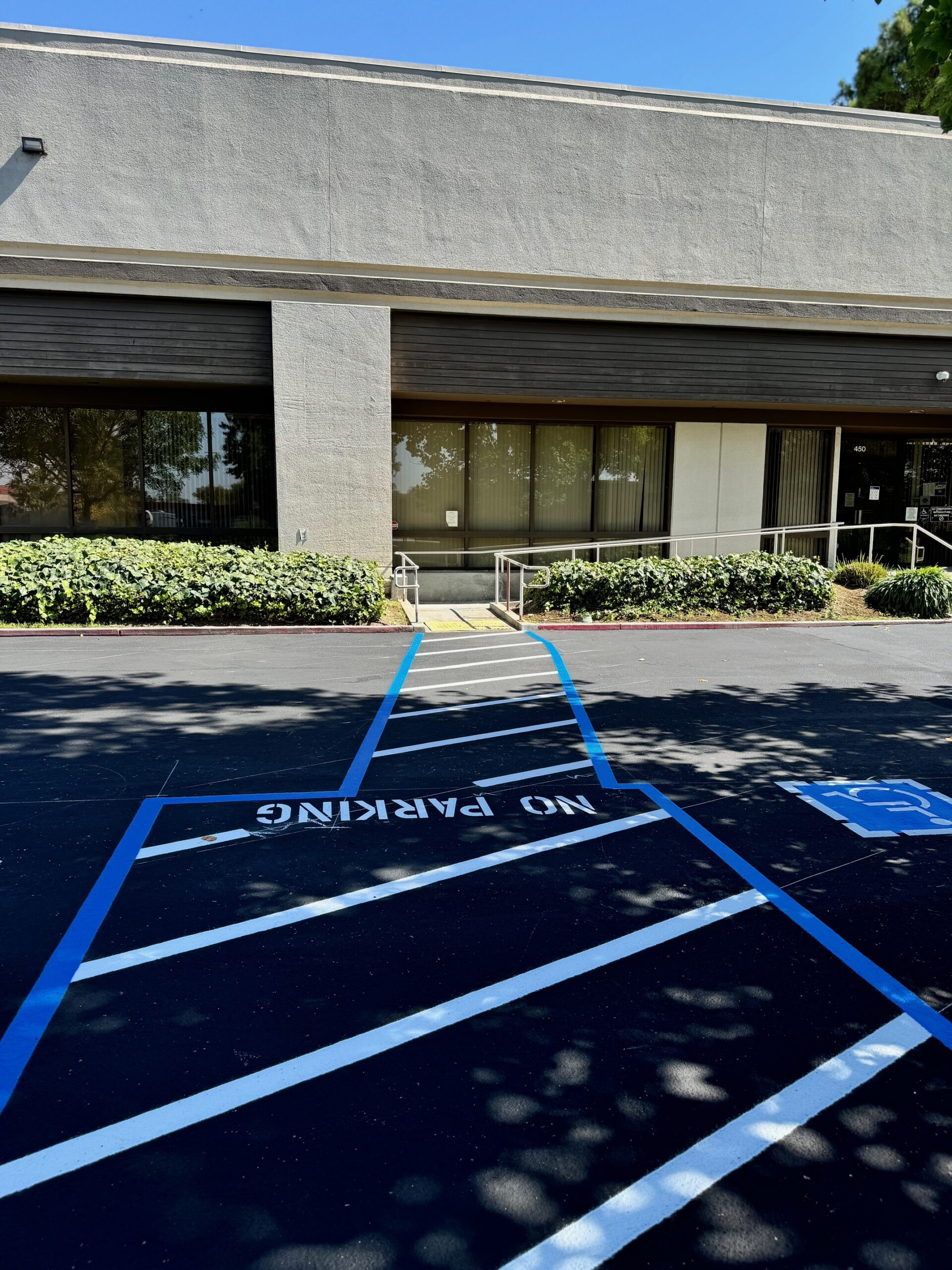
- Layout planning — Design for truck routes, trailer staging, dock approaches, employee parking, pedestrian walkways, fire lanes, and ADA-accessible stalls per current code.
- Surface cleaning — Ensure the sealcoat is fully cured and clean so paint bonds properly.
- Measuring & marking — Snap chalk reference lines for straight, uniform stalls, lanes, and lettering.
- Striping application — Apply traffic-grade paint with a line striping machine for crisp, high-visibility lines.
- Stenciling & specialty markings — Add ADA symbols, truck lane arrows, dock numbers, fire lanes, crosswalks, safety zones, and no-parking areas.
- Curing & reopening — Allow paint to dry (typically 30–60 minutes per coat), remove barricades, and reopen the site.
Equipment Used on This Project
- Asphalt paver
- Milling/grinding machine — a core EARTHTEK specialty
- Motor grader and skid steers
- Vibratory drum rollers and pneumatic finish rollers
- Dump trucks and material transfer vehicles
- Plate compactors for edges and tight areas
- Sealcoating spray rig and squeegee equipment
- Hot rubberized crack sealing kettle
- Line striping machine, stencils, and layout tools
The Result
A heavy-duty asphalt surface engineered for daily industrial operations — protected by sealcoating against UV, water, and fuel damage, and organized with clear striping that keeps trucks, equipment, and employees moving safely for years to come.
Need Industrial or Commercial Paving?
Whether you manage a warehouse, distribution center, manufacturing facility, or industrial yard, EARTHTEK Paving and Grinding Inc delivers industrial asphalt paving, sealcoating, grinding, and striping built for heavy-duty use — with phased scheduling that keeps your operations running. Contact us today for a free project estimate.
Gallery
Get a Free Estimate
Fill out the form below and we'll get back to you within 1 business day.