Asphalt Paving & Striping Project
Project Overview
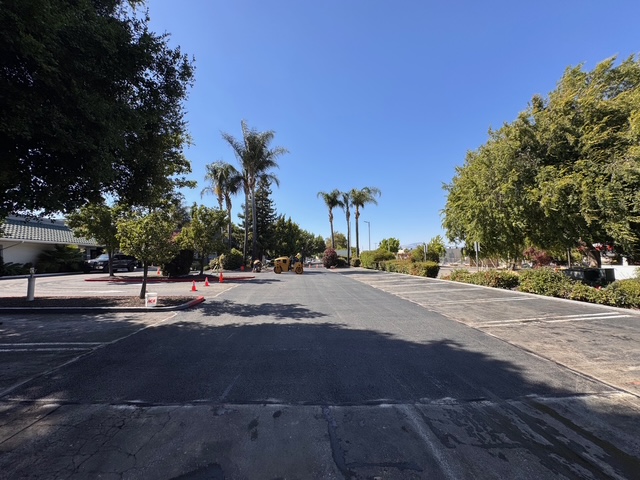
EARTHTEK Paving and Grinding Inc completed this asphalt paving and striping project to improve surface durability, traffic flow, and overall property appearance. Our crew installed a smooth, long-lasting asphalt surface using high-quality hot mix materials and proven techniques, applied protective sealcoating, and finished with high-visibility parking lot striping that keeps traffic organized and the property looking sharp.
Durable pavement, clear markings, and a protected surface work together as a system: the asphalt carries the load, the sealcoat defends it from water, UV, and chemicals, and the striping directs traffic safely through the property. This project delivered all three — a complete pavement package built for daily use and long-term performance.
Scope of Work
- Asphalt paving installation
- Protective sealcoating
- Parking lot striping and pavement markings
Why This Project Was Needed
Pavement problems rarely stay small. These are the warning signs that made this project the right investment:
- Alligator cracking and potholes — indicate base failure, damage vehicles, and create trip hazards for visitors
- Oxidized, gray, brittle asphalt — unsealed pavement dries out under UV exposure and cracks at an accelerating rate
- Faded or missing striping — creates parking confusion, wasted stall space, and unsafe pedestrian movement
- Poor traffic flow — unclear lanes and missing arrows cause congestion and near-misses at entrances and drive aisles
- ADA non-compliance — outdated accessible stalls and missing markings expose the property to fines and lawsuits
- Standing water and drainage issues — ponding accelerates pavement failure and creates slip-and-fall liability
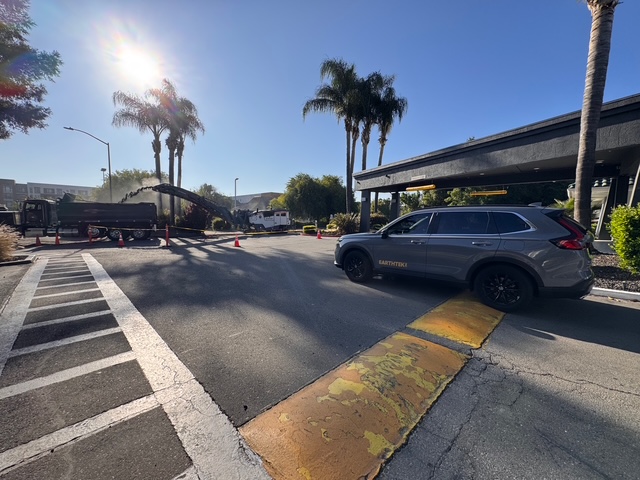
Our Asphalt Paving Process
- Site evaluation & planning — Assess pavement condition, drainage, and traffic loads; phase the work to keep the property accessible during construction.
- Demolition & removal — Mill or excavate failed asphalt and haul it away, often recycling it as reclaimed asphalt pavement (RAP).
- Grading & sloping — Shape the sub-surface to direct water runoff toward drains and away from buildings — proper drainage is the #1 factor in pavement lifespan.
- Sub-base preparation — Install and compact aggregate base rock for a stable, load-bearing foundation.
- Proof roll & repairs — Run a loaded truck over the sub-base to find soft spots; undercut and repair weak areas before paving.
- Binder course installation — Lay the lower asphalt layer with larger aggregate for structural strength.
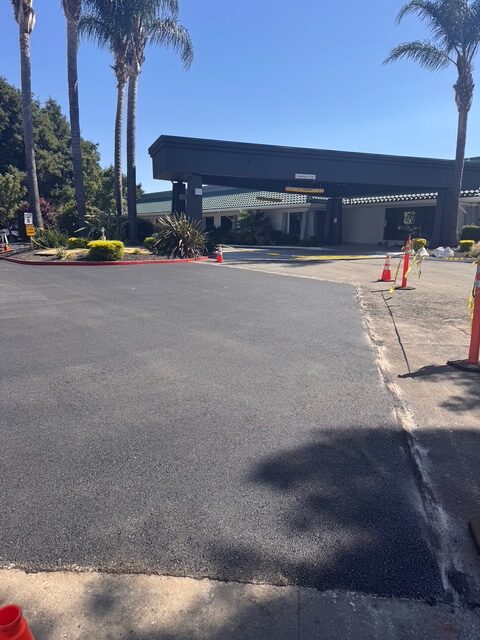
- Surface course paving — Install the smooth top layer of hot mix asphalt with a paver at consistent depth and grade.
- Compaction — Compact each layer with vibratory and finish rollers while hot to achieve target density and a tight, sealed surface.
- Transitions & cleanup — Blend joints at sidewalks, aprons, and drainage structures; clean the site and allow cure time.
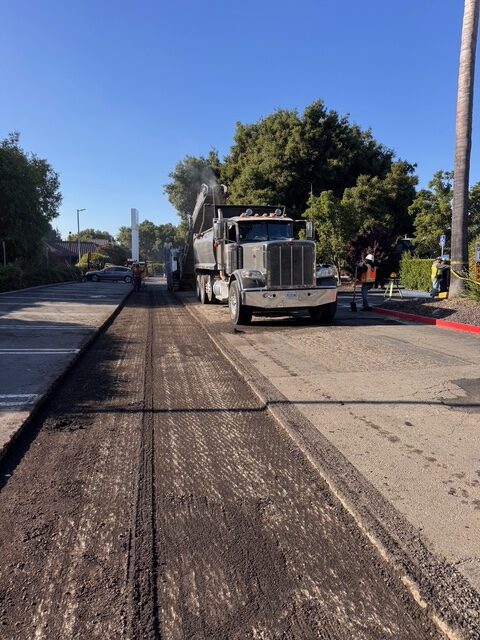
Our Sealcoating Process
- Cure time — Allow new asphalt to cure (typically 6–12 months) before the first sealcoat; existing surfaces can be sealed once repaired and cleaned.
- Surface preparation — Clean dirt, debris, and vegetation; prime oil spots so the sealer bonds properly.
- Crack filling — Seal any cracks with hot rubberized crack sealant to keep water out of the base.
- Sealcoat application — Apply commercial-grade sealer by spray or squeegee in two uniform coats.
- Curing & reopening — Allow 24–48 hours before reopening to traffic, phased by section to keep the property operating.
Note: resealing every 2–3 years is the most cost-effective way to extend pavement life.
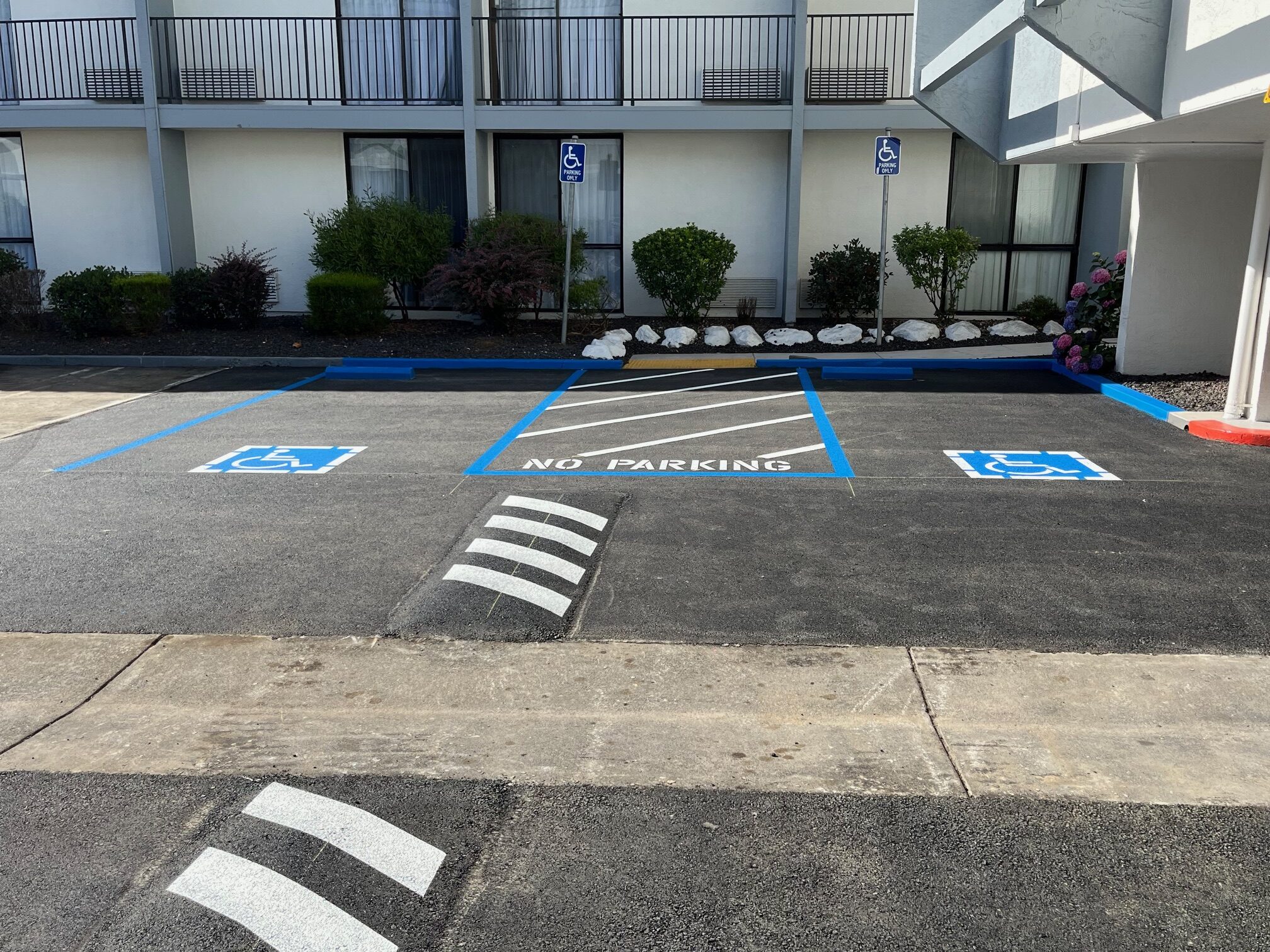
Our Parking Lot Striping Process
- Layout planning — Design stall counts, drive aisles, directional flow, fire lanes, and ADA-accessible spaces per current code.
- Surface cleaning — Ensure the sealcoat is fully cured and the surface is clean so paint bonds properly.
- Measuring & marking — Snap chalk reference lines for straight, uniform stalls, arrows, and lettering.
- Striping application — Apply traffic-grade paint with a line striping machine for crisp, high-visibility lines.
- Stenciling & specialty markings — Add ADA symbols, directional arrows, crosswalks, fire lanes, and no-parking zones.
- Curing & reopening — Allow paint to dry (typically 30–60 minutes per coat), then reopen the lot.
Equipment Used on This Project
- Asphalt paver
- Milling/grinding machine — a core EARTHTEK specialty
- Motor grader and skid steers
- Vibratory drum rollers and pneumatic finish rollers
- Dump trucks and material transfer vehicles
- Plate compactors for edges and tight areas
- Sealcoating spray rig and squeegee equipment
- Hot rubberized crack sealing kettle
- Line striping machine, stencils, and layout tools
The Result
A smooth, durable asphalt surface protected by sealcoating and organized with crisp, code-compliant striping — improved traffic flow, stronger curb appeal, and a pavement system built to perform for years with simple periodic maintenance.
Need Asphalt Paving, Sealcoating, or Striping?
Whether your property needs new pavement, protective maintenance, or a fresh layout, EARTHTEK Paving and Grinding Inc delivers complete asphalt paving, sealcoating, and striping services built for high-traffic use — with phased scheduling that keeps your property open. Contact us today for a free project estimate.
Gallery
Get a Free Estimate
Fill out the form below and we'll get back to you within 1 business day.