Most commercial parking lots in California are sealcoated reactively — when the surface looks bad enough that someone finally calls a contractor. By that point, the window for maximum ROI has usually passed. The asphalt has oxidized past the point where a sealcoat can reverse surface damage, cracks have widened enough to need filling before sealing, and the lot is now a repair job rather than a maintenance job.
The math on proactive sealcoating is not subtle. Regular sealcoating every two to three years costs roughly $0.15 to $0.50 per square foot and can extend pavement life by 8 to 15 years. Skipping it allows oxidation and water infiltration to accelerate deterioration, forcing resurfacing at $1 to $3 per square foot within 5 to 7 years instead of 15 to 20. Property managers who defer a $2,000 sealcoating job routinely face $40,000 parking lot replacements five years later.
This post is for commercial property managers and asset managers who want a structured, lot-specific maintenance approach — not a generic "every two to three years" guideline that ignores traffic volume, use type, and surface condition. The right schedule depends on how the lot actually operates.
What Sealcoating Does — and What It Doesn't
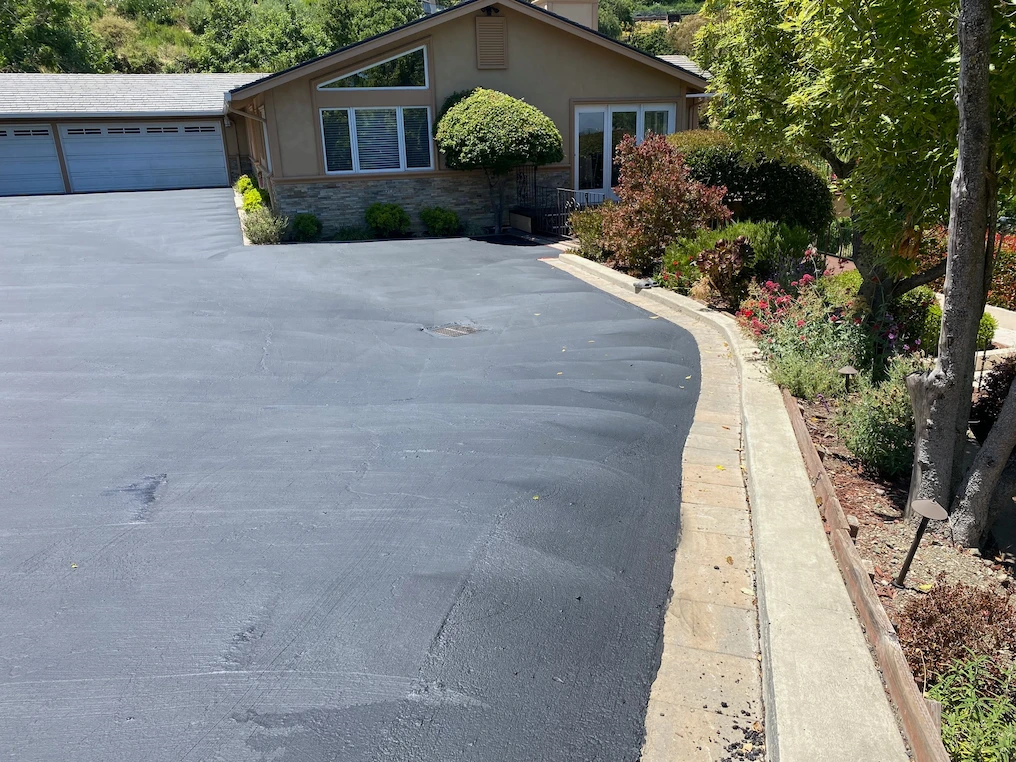
Sealcoating is a surface preservation treatment. It applies a thin protective layer over existing asphalt that blocks UV oxidation, waterproofs the surface, and resists fuel and oil penetration. When applied at the right time, it extends pavement life by 3 to 5 years per application and prevents the surface deterioration that leads to cracking and base failure.
What it does not do: fix structural problems. Sealcoating cannot repair existing cracks, fill potholes, or address base layer failures. A lot with active cracking, rutting, or subbase movement needs asphalt repair and patching before sealcoating — applying a sealcoat over active damage locks the problem in and accelerates deterioration. The correct sequence is always repair first, seal second.
This distinction matters for budget planning. A property manager who conflates sealcoating with repair will either overspend on sealcoating when the lot needs repair, or underspend on repair when they budget for sealcoating. The two services address different conditions and belong in different line items.
The Optimal Timing Window
The highest-ROI moment to sealcoat a commercial lot is when the surface is still structurally sound but showing early oxidation — typically identified by surface graying, hairline cracking, or individual aggregate stones becoming visible through the surface. At this stage, sealcoating arrests the oxidation cycle and delivers its full lifespan extension.
Two timing errors are common on commercial properties:
- Too early: New asphalt requires 6 to 12 months to fully cure before the first sealcoat. Sealing too soon traps residual volatile oils in the asphalt, causing adhesion failure and premature sealcoat breakdown.
- Too late: Once cracking has progressed into the base layers or the surface has significant structural damage, sealcoating provides cosmetic improvement only. The underlying failure continues regardless of what's applied on top.
For San Jose properties specifically, the best application window is late spring through early fall — April through October — when temperatures support proper curing. Sealcoating applied in cold or wet conditions cures poorly and fails faster, negating the maintenance investment.
Recommended Sealcoating Schedule by Commercial Lot Type
The right cycle is not one-size-fits-all. Traffic volume, vehicle type, and use pattern all affect how quickly a sealcoat degrades. Here is the recommended schedule by property type:
| Property Type | Avg. Cycle | Reasoning |
|---|---|---|
| High-traffic retail / restaurant / grocery | Every 24–36 months | Heavy vehicle rotation degrades sealcoat faster; shorter cycle maintains protection |
| Office campus / business park | Every 36–48 months | Moderate traffic with predictable patterns; longer cycle remains cost-effective |
| Industrial / warehouse yard | Every 36–48 months | Heavy vehicles stress base, not just surface; combine with crack sealing each cycle |
| Mixed-use commercial | Every 30–36 months | Variable traffic zones; assess high-use entry lanes separately from low-use perimeter |
| New asphalt (first application) | 6–12 months after install | Allow full cure before sealing; first coat is critical for long-term adhesion |
One practical note: these cycles assume the sealcoat is applied at the right time in the lot's condition. A lot that is already several years overdue for sealing may need crack sealing and minor patching first, which shifts the first cycle's cost upward. From that corrected baseline, the regular cycle resumes.
The 7 Signs a Commercial Lot Needs Sealcoating Now
For property managers who have inherited a lot with an unknown maintenance history, these are the observable indicators that sealcoating is overdue:
- Surface color is gray or faded, rather than dark black — indicates UV oxidation has degraded the binder
- Individual aggregate stones are visible through the surface — the top layer of asphalt is eroding
- Hairline or surface cracks are appearing, particularly in high-traffic entry lanes and near drainage low points
- Oil and fuel stains are penetrating the surface rather than sitting on top — the existing sealcoat has worn through
- Existing striping is fading and ADA markings are becoming difficult to read
- Water is pooling in areas where it previously drained — may indicate surface depression or base movement (assess before sealcoating)
- More than 3 years have passed since the last sealcoat on a high-traffic lot, or more than 5 years on a low-traffic lot
One sign that disqualifies sealcoating as the right solution: cracks wider than ¼ inch, potholes, or areas of surface depression. Those require repair before any sealcoating work begins.
Sealcoating and Striping: Why They Must Be Paired
Every sealcoating application covers existing line striping. Property managers who schedule sealcoating without budgeting for restriping end up with a freshly sealed lot with no markings — an ADA compliance violation and a traffic safety issue. Restriping after sealcoating is not an optional add-on, it is a required part of the project scope.
For commercial lots, restriping after sealcoating is also the opportunity to update ADA-accessible space count, dimensions, and signage to current California CBC Chapter 11B standards. If the lot's accessible spaces are outdated — wrong count for the current stall total, undersized access aisles, or faded ISA markings — the restriping event is the most cost-effective moment to correct them. Doing it as a standalone project later costs significantly more in mobilization. For a full breakdown of what California requires, see the post on ADA parking stall requirements in California.
EarthTek's commercial striping services are scheduled to follow sealcoating work as a combined project, eliminating the coordination overhead and ensuring the lot returns to full compliance in a single mobilization.
Frequently Asked Questions
How often should a commercial parking lot be sealcoated?
It depends on traffic volume and use type. High-traffic lots serving retail, restaurants, or grocery stores should be sealcoated every 24 to 36 months. Office campus and business park lots with moderate traffic can extend to 36 to 48 months. The key variable is how quickly the sealcoat degrades under vehicle load — a lot handling constant vehicle rotation wears through sealcoat significantly faster than one with stable parking patterns.
What does commercial sealcoating cost per square foot in California?
Professional two-coat commercial sealcoating in California typically runs $0.17 to $0.30 per square foot for the sealcoating application itself. A typical 50,000-square-foot commercial lot runs approximately $8,500 to $15,000. Most commercial lots also require crack sealing before sealcoating (roughly $1 to $2 per linear foot) and restriping after (variable by lot complexity). These are not optional line items — they are required parts of a complete project.
Can you sealcoat a parking lot that has cracks?
Minor hairline cracks can be addressed with crack sealing before sealcoating. Cracks wider than ¼ inch, active potholes, and areas with base layer movement or surface depression need repair before any sealcoating is applied. Sealcoating over active structural damage does not fix the underlying problem — it temporarily covers it while the deterioration continues underneath. A pre-application assessment will identify which conditions require repair first.
How long after sealcoating can the parking lot be used?
Commercial sealcoating is typically ready for foot traffic within 8 to 12 hours and vehicle traffic within 24 to 48 hours, depending on temperature and humidity at the time of application. For large commercial lots where full closure is not operationally possible, phased sealcoating — sealing and reopening one section at a time — is standard practice for active commercial properties.
Does sealcoating a parking lot require ADA restriping?
Yes. Sealcoating covers all existing pavement markings, including ADA-accessible space designations, access aisle markings, fire lanes, and directional arrows. Restriping is a required part of every sealcoating project — not an optional add-on. The restriping event is also the most cost-effective opportunity to update accessible space count and dimensions to current California CBC Chapter 11B standards if the lot has not been updated recently.
The Cost Case for a Scheduled Maintenance Program
The ROI on commercial sealcoating is one of the clearest in property maintenance. Over a 12-year span, sealed pavement costs approximately $0.39 per square foot in total maintenance investment versus $1.76 per square foot for unsealed pavement. This is a roughly 78% reduction in total ownership cost according to data from the Pavement Coatings Technology Council. Sealcoating costs 10 to 15% of what full repaving runs. A properly maintained lot can reach 25 to 30 years before replacement is needed; an unmaintained lot typically requires resurfacing or replacement in 10 to 15 years.
For multi-property commercial portfolios, the compounding effect is significant. A portfolio of five properties, each with a 30,000-square-foot lot, defers roughly $600,000 to $750,000 in repaving costs over 15 years compared to the same portfolio maintained on a regular sealcoating schedule — at a maintenance cost of approximately $75,000 to $90,000 over the same period.
EarthTek provides commercial sealcoating services for parking lots throughout the San Jose area. If your lot is overdue or you want help building a multi-year maintenance schedule for a commercial portfolio, contact our team for a property assessment.