The patch held for six months. Then it cracked again — in exactly the same spot. You called the contractor back, paid for another repair, and now you''re watching the same section start to buckle a year later. If this cycle sounds familiar, the problem almost certainly isn''t the quality of the paving work. It''s what''s happening underneath, and it''s being driven by water.
Water infiltration is one of the leading causes of pavement damage in the United States, according to the Federal Highway Administration, contributing to cracking, rutting, and base failures that significantly shorten pavement service life. Yet most property owners — and even some contractors — treat drainage as an afterthought, focusing on the visible surface damage while the actual cause goes unaddressed beneath it. The result is a cycle of recurring repairs that costs more over time than solving the drainage problem once.
This post explains how water destroys asphalt from the inside out, what the signs of a drainage-driven failure look like, how drainage planning integrates with grading and paving work, and — most importantly — who to call when your pavement problem is really a water management problem.
How Water Destroys Asphalt from the Inside Out
Asphalt pavement is a layered system. The visible surface you drive on is supported by a compacted aggregate base beneath it, which in turn sits on a prepared subgrade. Each layer depends on the others for stability. When water gets into that system — through cracks, low spots, or inadequate grading — it begins weakening the foundation from below, long before any visible damage appears on the surface.
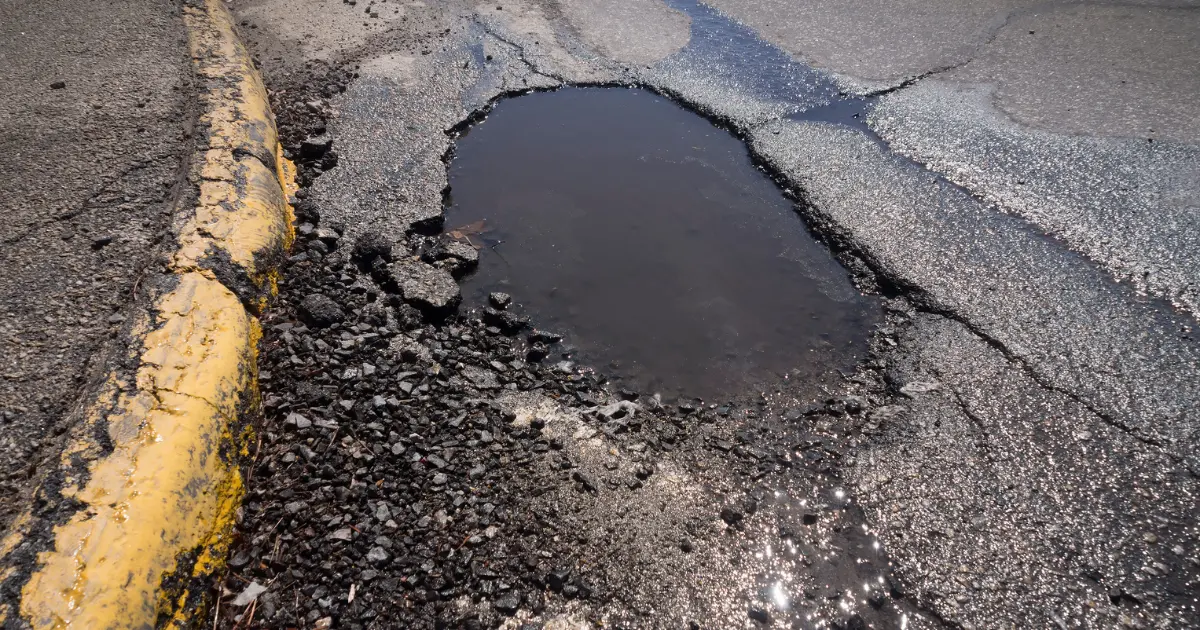
Once water saturates the aggregate base, that layer loses its load-bearing capacity. The asphalt above it begins to flex under the weight of vehicles rather than transferring that load rigidly downward. Each time a vehicle crosses a saturated area, the stress on the surface increases. Over time, this produces fatigue cracking — the web-like alligator pattern that signals base failure — along with depressions, potholes, and eventually surface collapse.
In the Bay Area, this cycle is accelerated by the regional wet season. San Jose typically sees the majority of its annual rainfall concentrated between November and March. Every crack left unsealed before the first storms provides a direct entry point for water. By spring, what was a hairline surface crack in October can have become a drainage-fed base failure — and a repair job that now requires excavation rather than patching.
Signs Your Pavement Problem Is Actually a Drainage Problem
Surface damage and drainage failure often look identical from above. The following signs suggest that water management — not just the asphalt surface — needs attention:
- Recurring failures in the same location. If the same area keeps cracking, sinking, or developing potholes after repeated repairs, the base beneath it is being continuously weakened by moisture. The repair isn''t failing — the drainage condition that caused the original failure is still active.
- Standing water more than 24 to 48 hours after rain. Properly graded pavement sheds water quickly. Pooling that persists well after a storm indicates either a grading deficiency, a blocked or undersized drainage structure, or a low spot created by base settlement.
- Depressions or "bowls" in the pavement surface. Low areas that collect water are both a drainage failure and an accelerant. The longer water sits in a depression, the faster it works its way into the base. These spots are almost always among the first to fail structurally.
- Alligator cracking that isn''t explained by pavement age. When a relatively young parking lot or driveway develops the web-like cracking pattern associated with base fatigue, poor drainage is frequently the cause. Base materials don''t saturate on their own — water has to get there.
- Pavement that feels soft or unstable underfoot near low areas. A saturated base loses stiffness. If the surface feels spongy or gives slightly when walked on, the aggregate beneath it has been compromised by prolonged moisture exposure.
How Drainage Planning Integrates with Site Grading and Paving
Effective drainage isn''t just about installing a catch basin. It requires coordination between surface grading, subsurface drainage structures, and the paving work itself — which is why the contractor who handles your drainage should also understand pavement. A drainage solution designed without accounting for existing paving elevations can create new problems. A paving project completed without addressing known drainage issues will fail faster than the previous surface.
The process starts with a site evaluation that maps how water currently moves across the property: where it enters, where it collects, and where it exits — or fails to. From that assessment, a drainage plan can be developed that may involve one or more of the following:
- Regrading. Reshaping the surface elevation to restore the proper slope — typically 1 to 2 percent — that directs water away from structures and toward drainage outlets. Grading corrections often go hand in hand with paving work, since new asphalt allows the contractor to set final elevations precisely.
- Catch basin installation or repair. Catch basins are inlet structures set into the pavement surface that collect runoff and route it into the stormwater system. When they are absent, undersized, clogged, or damaged, water that should be captured sits on the pavement surface instead.
- French drain installation. A French drain is a subsurface perforated pipe surrounded by drainage aggregate, installed in a trench to intercept groundwater or subsurface flow before it reaches the base layers beneath the pavement. These are particularly effective when water is entering a pavement area from an adjacent slope or high water table condition.
- Trench drains. Linear drainage channels installed across the pavement surface to intercept sheet flow in areas where water consistently runs across the lot rather than toward a basin. Common at property entrances, building thresholds, and the base of sloped drives.
The right combination depends on the specific conditions at your property. There is no universal drainage solution — only solutions that fit the site.
Surface Fixes vs. Subsurface Solutions: Understanding the Difference
Not every drainage-related pavement problem requires subsurface work. Some issues are genuinely surface-level — a grading correction, a resurfacing that restores proper slope, or a catch basin cleaning — and these are the right starting point when the base is still structurally sound. The distinction matters because subsurface drainage work involves excavation, which adds time and cost.
The escalation to subsurface work becomes necessary when the source of water is below grade — a high water table, a subsurface spring, irrigation overspray that has saturated adjacent soil, or water traveling laterally through the ground from a neighboring property. In these cases, surface grading adjustments alone will not stop the moisture from reaching the base, and the pavement will continue failing regardless of how many times the surface is repaired.
The practical test: if a low area has been repaired or resurfaced and water still pools in the same location after rain, the drainage source is likely below the surface. At that point, the conversation should shift from paving to drainage engineering.
Who to Call: Paving Contractor or Drainage Specialist?
This is the question most property owners get wrong — and the answer is both, ideally from the same company. A drainage contractor who doesn''t understand paving may solve the water problem but leave the pavement in worse shape than before. A paving contractor who doesn''t address drainage will resurface the lot and hand you a new surface that faces the same failure conditions as the old one.
The right contractor for a drainage-related pavement problem is one that handles both — site grading, drainage structure installation, and paving — under one scope of work. This ensures that the drainage solution is designed to work with the final paving elevations, that the paving work accounts for the drainage plan, and that there''s a single point of accountability for the outcome.
EarthTek provides drainage contractor services across San Jose and the Bay Area as part of our full site work capabilities. We handle grading, excavation, French drain and catch basin installation, and the paving work that follows — so the drainage solution and the finished surface are designed as a single system. If your pavement keeps failing in the same spots, contact us for a site evaluation before committing to another repair.
Frequently Asked Questions
Who do I call for drainage issues in a parking lot — a plumber or a paving contractor?
Neither a plumber nor a standard paving contractor alone is typically the right answer. Parking lot drainage problems involve site grading, drainage structures like catch basins and French drains, and paving work — a scope that sits at the intersection of site work and pavement construction. A contractor with capabilities in both site work and paving is the appropriate call.
Can drainage be fixed without repaving the entire lot?
Often, yes. Depending on the source and severity of the drainage problem, solutions can range from catch basin installation or repair, targeted regrading of specific low areas, or subsurface French drain installation — all of which can be completed with localized paving repairs rather than full resurfacing. A site assessment will determine whether the base has been compromised enough to require broader repaving.
How do I know if my pavement failure is caused by drainage?
The most reliable indicators are recurring failures in the same location after repairs, persistent standing water after rain, and alligator cracking in areas that aren''t old enough to justify base fatigue from age alone. If your pavement fails the same way in the same places despite repeated repairs, water is almost always involved. A professional site evaluation that looks at grading, drainage structures, and base condition will confirm the cause.
What is a French drain and do I need one?
A French drain is a subsurface perforated pipe installed in a gravel-filled trench that intercepts and redirects groundwater or lateral subsurface flow before it can saturate the base layers beneath pavement. You likely need one if water is reaching your pavement from below grade rather than from surface runoff — for example, if a repaired area re-saturates even without surface water pooling. A site assessment can confirm whether the water source is above or below grade.
How much does parking lot drainage repair cost in San Jose?
Drainage repair costs vary considerably depending on the scope. Catch basin cleaning or minor repairs are relatively modest. Installing new catch basins, regrading sections, or adding subsurface French drains involves excavation and paving restoration, which increases cost. However, these costs should be weighed against the ongoing expense of repeated pavement repairs that fail to address the root cause — in most cases, solving the drainage problem once is less expensive over a five-year horizon than continuing to repair the symptom.