Property managers tend to use "repair" and "resurface" as if they mean the same thing: fix the parking lot. They don't, and picking the wrong one wastes money in opposite directions. Resurface a lot that only needed a few patches, and you have paid for a full overlay you didn't need yet. Keep patching a lot that actually needs resurfacing, and you are paying repeatedly for a fix that never holds because the problem is the whole surface, not the three spots you keep filling.
The decision comes down to two questions: how much of the surface is affected, and is the base underneath still sound? Get both answers, and the rest of this guide is just confirming what you already know.
What's the Difference Between Repair and Resurfacing?
Repair, also called patching, addresses isolated damage. A contractor cuts out or treats specific cracks and potholes and leaves the rest of the surface alone. It is fast, targeted, and inexpensive, but it only fixes what it touches.
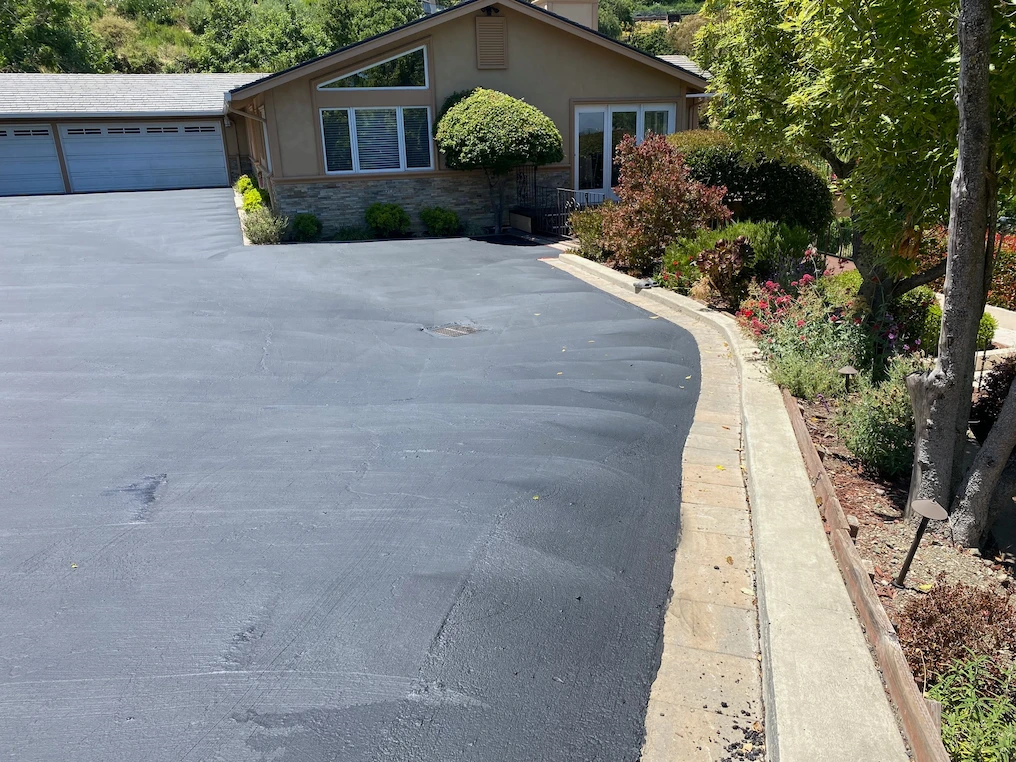
Resurfacing, sometimes called an asphalt overlay, mills off the worn top layer (or applies new asphalt directly over a sound existing surface) and lays a fresh layer across the entire lot, not just the damaged spots. It resets the surface and improves ride quality, appearance, and durability across the board, but it depends on the base underneath still being structurally sound. Resurfacing over a failed base just hides the problem under a new layer that will crack again on the same schedule.
When Repair Is the Right Call
Repair is usually the better choice when most of the following are true:
Damage is confined to specific spots, generally less than a quarter to a third of the total surface, rather than spread evenly across the lot.
The base underneath is intact: no widespread alligator cracking, no sunken or settling sections.
The lot was paved or last resurfaced within roughly the last 10 to 15 years.
The damage is recent or isolated, like a handful of potholes or a few cracked sections near drive lanes.
If that describes your lot, asphalt patching and repair services address the specific damage without the cost of resurfacing the whole property.
When Resurfacing Is the Right Call
Resurfacing tends to make more sense when most of the following are true:
Cracking and surface wear are spread broadly across the lot rather than isolated to a few spots.
You have patched the same general areas more than once in the past few years, a sign the surface itself is aging, not just a few weak points.
The surface looks faded, rough, or worn overall, but there is no sinking or alligator cracking signaling base failure.
You want to improve appearance and ride quality across the property, not just fix what is broken.
EARTHTEK's asphalt resurfacing and overlay services apply a fresh 1.5 to 2 inch layer across the full surface, which adds 15 to 20 years of durability and typically costs 40 to 60% less than full replacement, with most projects finished in 2 to 3 days.
When Neither Is Enough: Signs You Need Full Replacement
If the base material itself has failed, widespread sinking, soft or spongy areas, or alligator cracking across most of the lot, resurfacing will not hold for long because it depends on a sound base. At that point, full reconstruction, removing the existing pavement and rebuilding from the base up, is usually the more cost-effective long-term option, even though it carries the highest upfront cost and longest timeline of the three.
Repair vs. Resurface vs. Replace: Side-by-Side Comparison
Repair (Patching) Resurfacing (Overlay) Replacement (Reconstruction) Addresses Isolated cracks and potholes where the base is still sound Widespread surface wear across the lot when the base is still sound Failed base material or damage beyond what resurfacing can fix Typical added lifespan Extends the life of the repaired spot, not the whole lot 15 to 20 years with a standard 1.5 to 2 inch overlay Equivalent to a new pavement installation Relative cost Lowest per project; can add up if used repeatedly across an aging lot 40–60% less than full replacement Highest of the three options Typical timeline A day to a few days, depending on scope 2 to 3 days; drivable in 24–48 hours Longest of the three; full closure is typically required
A Quick Decision Checklist
Walk your lot and answer these in order:
Is the damage confined to a few spots, or spread across the lot? Confined points toward repair. Spread out points toward resurfacing.
Is there any sinking, soft spots, or alligator cracking? If yes, the base may have failed, talk to a contractor about whether resurfacing is still viable or replacement is the better call.
Have you patched the same areas more than once? Repeat patching in the same spots usually means the surface around it is also failing and resurfacing will be more cost-effective than another patch.
When was the lot last paved or resurfaced? Inside 10 to 15 years with isolated damage, repair is likely sufficient. Beyond that with widespread wear, resurfacing is worth pricing out.
If your answers point in different directions, that is normal. It is also exactly why a free, on-site inspection matters more than guessing from this checklist alone.
Frequently Asked Questions
Can resurfacing be done over old patches?
Yes, as long as the base underneath those patches is sound. Resurfacing adds a new layer across the entire surface, which blends old patches into the finished result. If a patch was placed because the base had failed in that specific spot, that area needs to be properly repaired before resurfacing, not simply paved over.
How long does resurfacing last compared to repair?
A standard resurfacing overlay adds 15 to 20 years of durability across the whole lot. Repair extends the life of the specific area that was patched, not the surrounding surface, which is why a heavily patched lot often still needs resurfacing eventually.
Is resurfacing cheaper than full replacement?
Yes. Resurfacing typically costs 40 to 60% less than full replacement because it builds on the existing base rather than removing and rebuilding the entire pavement structure.
Will resurfacing fix drainage problems?
Not on its own. Resurfacing generally follows the existing grade, so a lot with real drainage or slope issues needs grading work as part of the project, not just a new surface layer. Our commercial paving services include drainage integration alongside resurfacing and new paving for exactly this reason.
How do I know if my base has failed?
Sinking sections, soft or spongy spots, and alligator cracking across large areas are the clearest indicators. Our companion post, 7 Signs You Need Commercial Parking Lot Repair, walks through these in more detail if you are still trying to diagnose what you are seeing.
Get an Inspection, Not a Guess
The dividing line between repair and resurfacing is less about how bad the damage looks and more about whether the base underneath is still sound. A Federal Highway Administration report cites a Foundation for Pavement Preservation estimate that state transportation departments save at least $6 in later rehabilitation and reconstruction costs for every $1 spent on preservation. That figure covers public roads, not private parking lots, but the principle is the same: catching damage early costs less than rebuilding later. The expensive mistake is not choosing repair or resurfacing, it is choosing the wrong one for the condition the lot is actually in.
EARTHTEK has evaluated and repaired or resurfaced commercial lots across San Jose, Milpitas, and the wider Bay Area for more than 17 years. Our free on-site assessment tells you plainly which side of this decision your lot falls on, with a written estimate before any work starts.
Not sure which one your lot needs? Request a free estimate and we will walk the property with you and tell you exactly what it needs, and what it doesn't.