Most property managers default to sealcoating because it’s the cheaper, faster option, and on the surface, it looks like routine maintenance. But sealcoating a lot that has already failed underneath doesn’t protect anything — it just delays the real problem while adding a line item that won’t stop it.
The two treatments aren’t interchangeable, and picking the wrong one is expensive in both directions. Seal a structurally failed lot and you’ll be back to reconstruction within a year or two, having paid for a treatment that never had a chance. Overlay a lot that only needed a seal, and you’ve spent several times more than necessary on a problem that wasn’t structural to begin with.
This comes down to one question: is your pavement’s damage surface-level, or has it reached the base? Here’s how to tell the difference, and what each option actually costs you over the life of the pavement.
What Sealcoating Actually Protects
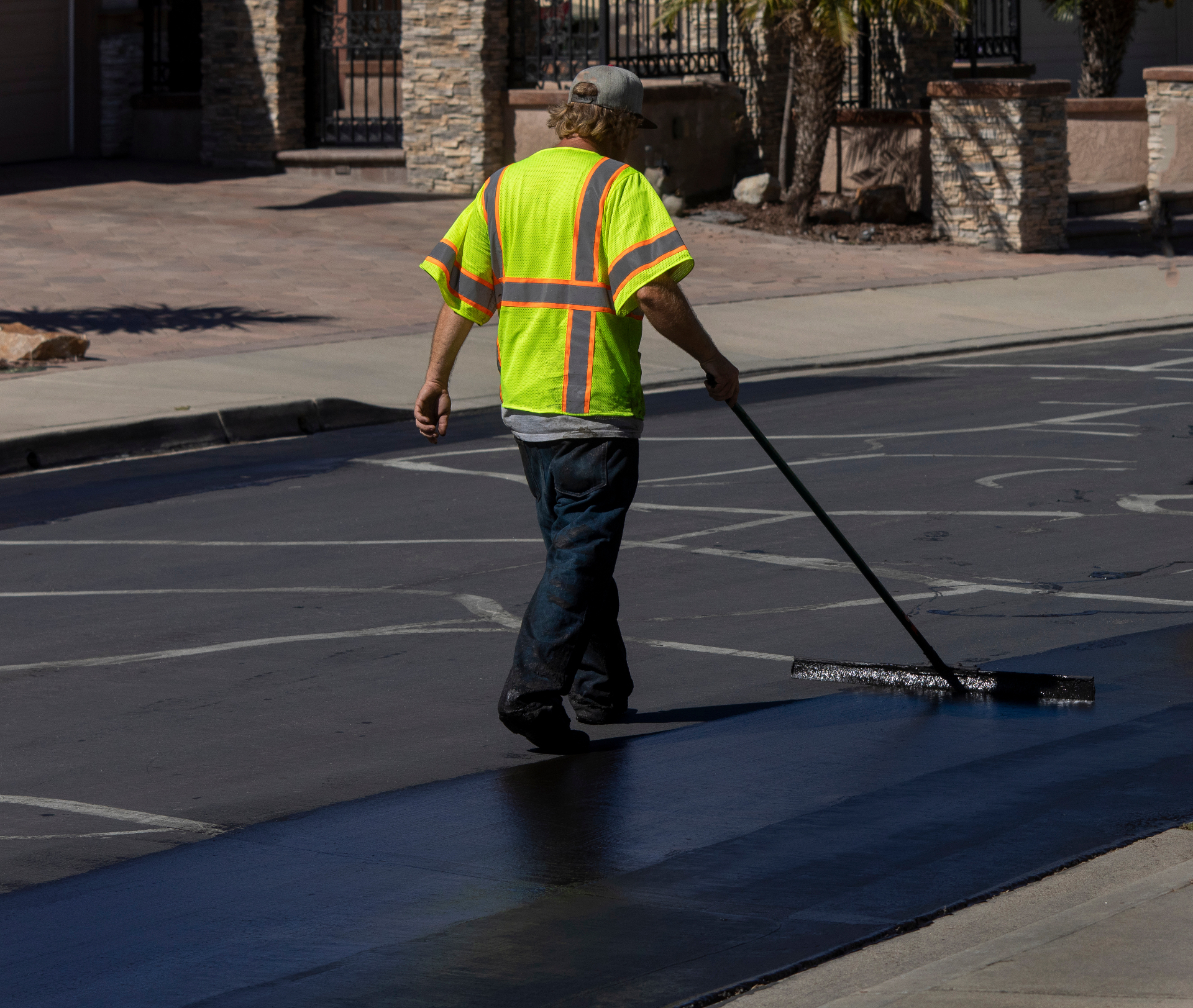
Sealcoating — along with related surface treatments like slurry seals — forms a thin protective layer across the pavement surface. It shields against UV exposure, oxidation, and minor surface wear, and it’s genuinely effective when applied to pavement that’s structurally sound.
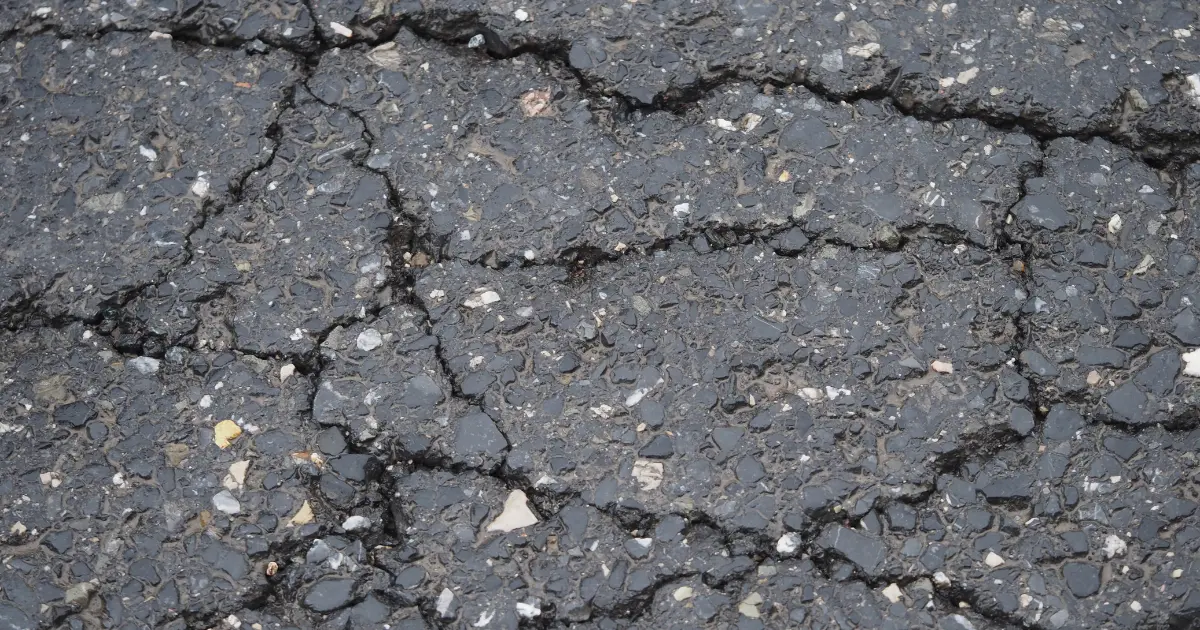
That’s also its limit. Before applying a slurry seal, the FHWA’s application checklist requires confirming there’s no alligator cracking present, because that pattern of interconnected cracking signals the subgrade underneath has already failed or isn’t draining properly. Sealing over that condition doesn’t address it — it just hides it temporarily.
What Mill-and-Overlay Actually Fixes
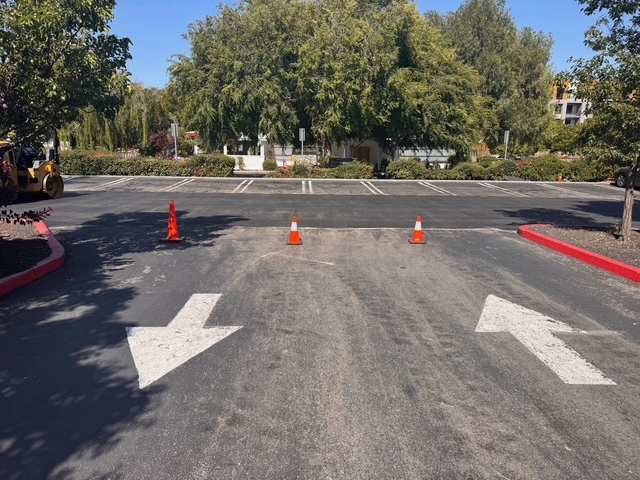
Mill-and-overlay is a different tool for a different problem. Crews mill off the damaged top layer of asphalt, then pave a new layer on top of what’s left. It corrects moderate surface distress — rutting, cracking, an uneven ride — that’s gone beyond what a seal treatment can handle.
What it doesn’t automatically do is add structural capacity. According to FHWA’s technical guidance on thin asphalt overlays, these treatments are generally intended to extend service life, not strengthen the pavement underneath — though placing an overlay before structural damage sets in can provide a modest structural benefit. Applied after fatigue cracking or base failure has already taken hold, an overlay will underperform and may fail early, the same way a seal coat would.
The Real Test: Surface-Level Damage or Structural Failure?
Before deciding between the two, look for these signs:
Fading, oxidation, minor hairline cracking, no rutting — this is sealcoating/slurry seal territory. The pavement structure underneath is intact.
Moderate rutting, spreading surface cracks, an uneven ride, but no alligator cracking — this is where mill-and-overlay earns its cost. The surface has degraded past what a seal can fix, but the base is still doing its job.
Alligator cracking, potholes, sunken or soft sections — this is a structural problem, and neither treatment alone will fix it. You’re looking at base repair or reconstruction first.
FHWA’s guidance recommends deflectometer testing to properly measure structural condition in ambiguous cases — but for most property managers, a visual walk-through using the criteria above, backed by a contractor’s assessment, is enough to make the right call.
What Each Option Actually Costs You Over Time
Treatment lifespan depends heavily on the condition of the pavement when it’s applied — not just the treatment itself. Per FHWA’s overview of pavement preservation treatments, crack and fog seals applied to pavement in excellent-to-good condition typically add 1 to 4 years of life. Chip seals and slurry seals, used on pavement in good condition with early rutting or water intrusion, add roughly 3 to 7 years. Thin overlays, appropriate once a pavement has dropped to fair or poor condition, can extend service life by 5 to 12 years.
Climate matters too. In FHWA’s dataset of thin overlay performance by region, warm, dry-to-moderate climates similar to the Bay Area’s reported service life extensions in the 7-to-10-year range for well-executed projects.
The number that actually matters isn’t the invoice total — it’s cost divided by years of extended service. A cheaper sealcoat that needs replacing every 3 years because it was applied to a lot that needed an overlay costs more over a decade than doing the overlay once.
Making the Right Call for Your Property
Before you request bids, get a straight answer to one question: is this surface damage, or structural damage? A contractor who skips that step and recommends a treatment from a drive-by look isn’t giving you a real assessment.
If your lot is due for its next resurfacing decision, our parking lot sealcoating ROI breakdown is a useful next read for the budget side, and our commercial parking lot maintenance guide covers how to build this decision into a longer-term maintenance plan instead of making it reactively every time.
Frequently Asked Questions
How do I know if my commercial parking lot needs sealcoating or a full overlay?
Look for alligator cracking, potholes, or sunken sections first — any of those mean the base has failed and neither treatment alone will fix it. If the damage is limited to fading, oxidation, or minor cracking with no rutting, sealcoating is appropriate. Moderate rutting and spreading cracks without alligator cracking usually call for a mill-and-overlay.
Can a mill-and-overlay be done without fixing cracking first?
Not effectively. Wide or active cracks and reflective cracking patterns will telegraph through a new overlay relatively quickly if they aren’t addressed with full-depth repairs or sealed before paving.
Is sealcoating a waste of money on an older parking lot?
Not if the base is still sound — sealcoating on structurally intact pavement is still one of the most cost-effective ways to extend its life. It becomes a waste of money specifically when it’s applied over alligator cracking or other signs of subgrade failure, since it won’t hold.
How long does a commercial parking lot overlay actually last?
Typically 5 to 12 years, depending on the condition of the pavement when the overlay was applied and local climate. Overlays placed before structural damage sets in, and maintained with regular sealcoating afterward, tend to land at the higher end of that range.