QUICK TAKEAWAY
Primary Insight: Asphalt crack sealing and sealcoating treat different failures and run in a fixed order. Crack sealing closes the path water uses to reach the base, and sealcoating protects the surface, which means sealcoating a lot with open cracks buys the wrong protection.
Key Fact: Caltrans guidance calls for hot applied crack sealants to cure three to four months before any seal or blanket is placed over them, which makes crack sealing a scheduling decision rather than a same-week add-on.
Best Suited For: Property managers and commercial property owners in San Jose and the greater Bay Area planning a pavement maintenance budget and deciding what to authorize first.
Sealcoating does not fix cracks. That single fact reverses the assumption behind a large share of the pavement maintenance requests contractors receive, because a freshly sealcoated lot looks repaired even when every crack under the coating is still open and still admitting water.
The two treatments answer different questions. Crack sealing asks how water is getting into the pavement structure. Sealcoating asks how fast the surface is oxidizing and wearing. Spending on the second while ignoring the first protects the part of the pavement that was not failing.
This post sets out what each treatment does, which cracks get sealed and which get filled, the cure time that governs the order of operations, and the one crack pattern where neither treatment is worth authorizing.
Crack Sealing, Crack Filling, and Sealcoating at a Glance
| Treatment | What It Solves | Service Life in Caltrans Guidance | When It Is the Wrong Choice |
|---|---|---|---|
| Crack sealing | Blocks water and incompressible debris from entering working cracks that open and close with temperature. | Up to 9 years of service depending on preparation and material. | On structural fatigue cracking, or on pavement whose base has already failed. |
| Crack filling | Reduces water infiltration into non-working or low-movement cracks with less preparation. | Up to 8 years, though flush emulsion in unrouted cracks runs 2 to 4 years. | On cracks that move significantly through the year, where a filler will pull apart. |
| Sealcoating | Seals a weathered surface, slows oxidation, reduces raveling, and restores appearance. | Not specified in Caltrans guidance; interval depends on traffic and surface condition. | As a substitute for crack treatment, or over a lot with unrepaired base failures. |
Crack Sealing and Sealcoating Solve Two Different Problems
Crack sealing and sealcoating solve two different problems, and the distinction is structural rather than cosmetic. Caltrans defines crack sealing and filling as methods that prevent the intrusion of water and incompressible materials into cracks, which makes them a defense of the pavement structure underneath.
Seal coats answer a surface question instead. Caltrans calls for a seal coat when pavement shows raveling or erosion, oxidation, a permeable surface, or slipperiness, and describes a fog seal as a light spray of diluted asphalt emulsion used to seal an existing surface, reduce raveling, and enrich dry and weathered pavement. That is the closest highway analogue to commercial parking lot sealcoating, and it says nothing about cracks.
The practical consequence is that the two treatments are not alternatives to be chosen between. A lot with open cracks and a sound, unweathered surface needs crack sealing and nothing else. A lot with a grey, oxidized surface and no meaningful cracking needs sealcoating and nothing else. Most lots need both, in that order.
Crack Sealing Comes First, and the Cure Time Is Not Optional
Crack sealing comes first because crack treatment materials need to cure before anything is placed over them. Caltrans guidance states that hot applied sealants require a three to four month cure time before being covered with a blanket or seal, and that cracks filled with emulsion materials should generally not be overlaid for at least a year.
Skipping that interval creates its own damage. Caltrans notes that heat from a new mat draws filler and sealer materials up through an overlay, producing fat spots, flushing, and shoving in the new surface. Sealing and then immediately coating does not lock the repair in; it contaminates the coating.
Sequencing pays off when it is respected. Caltrans states that proper sealing or filling of cracks before surface treatments are placed can greatly extend the life of the pavement, retard future cracking, minimize secondary cracking, and reduce water infiltration. Caltrans also directs that base failures and distorted surfaces be corrected before any seal coat goes down, which is why a pavement assessment should precede the work order rather than follow it.
Not Every Crack Gets the Same Treatment
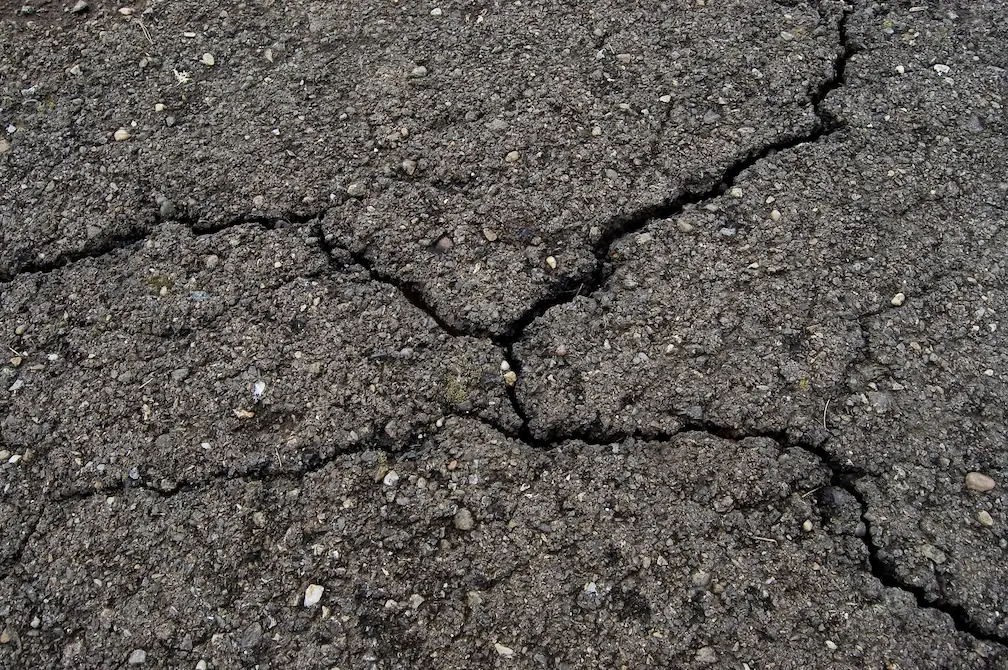
Not every crack gets the same treatment, because the deciding factor is how much the crack moves rather than how it looks. Caltrans defines a working crack as one with a quarter inch or more of horizontal movement annually, while FHWA sets that threshold lower at an eighth of an inch.
Working cracks get sealed. Caltrans describes crack sealing as placing specialized high quality materials into or over working cracks after thorough preparation, and treats it as the longer-term option. Non-working or closely spaced low-movement cracks get filled instead, using ordinary materials and less preparation, which Caltrans characterizes as a short-term measure to hold pavement together until scheduled rehabilitation.
Width sets the entry point. Caltrans triggers crack sealing once a crack exceeds a quarter inch, and treats cracks in a band from a quarter inch up to one inch wide. Because most real projects contain a mix of working and non-working cracks, Caltrans simplifies the problem by treating all cracks as working cracks and using only crack sealing materials. The same mixed-crack reality shows up on residential work, which is why driveway cracks keep coming back when the wrong material was used.
When Neither Treatment Will Help: Alligator Cracking
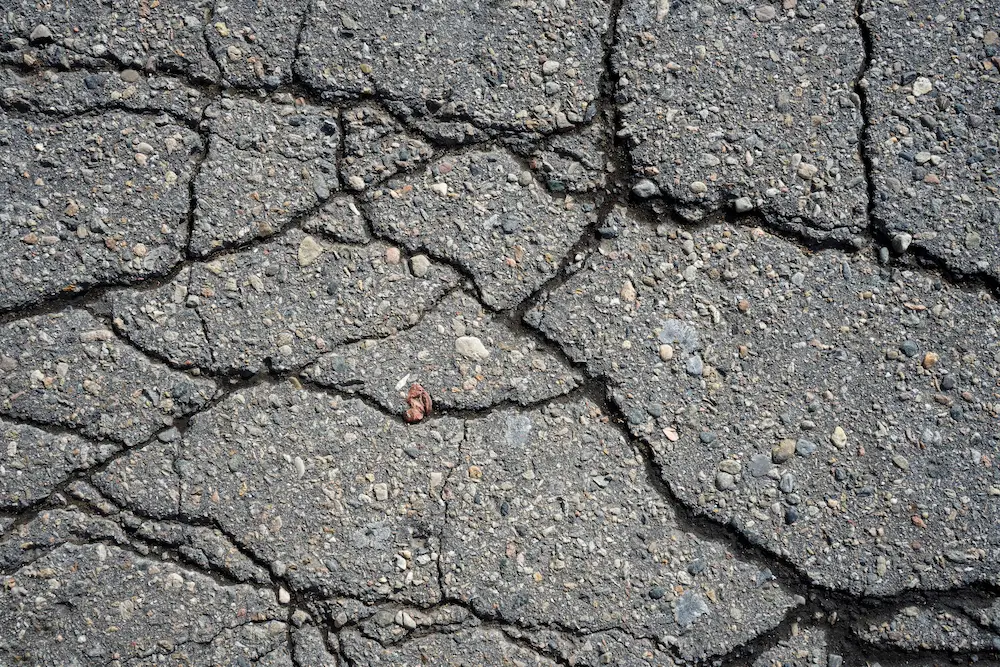
Alligator cracking is the pattern where neither treatment is worth authorizing. Caltrans classifies fatigue cracking, the interconnected pattern resembling alligator skin, as the result of repetitive traffic loads or high deflections often caused by weak or wet bases and subgrades, and states plainly that neither crack sealing nor crack filling can treat this type of structural failure.
Left alone, that pattern has a predictable ending. Caltrans notes that fatigue cracking is structural and, if not repaired, typically develops into potholes and pavement disintegration. Longitudinal cracking in the wheel paths is often the first visible sign that alligator cracking is beginning to form, which makes wheel path cracking the signal to order asphalt repair and patching rather than a crack seal.
Crack sealing carries a related failure mode worth knowing. Caltrans lists pothole formation among the ways a crack treatment fails: when a crack is not completely sealed, water continues to enter the pavement, and continued deterioration leads to pumping and potholes. A poorly executed seal can leave a property in the same position as no seal at all.
Timing Crack Sealing Around the Bay Area Rain Season
Crack sealing works best in cool weather when cracks sit at the midpoint of their movement range, which is why timing matters as much as material selection. Caltrans identifies fall as a good season across most of California, with air temperatures typically between 45 and 65 degrees Fahrenheit, and notes that cracks are usually at or near their midpoint of movement under those conditions.
The rain calendar sets the deadline. Caltrans recommends that cracks a quarter inch or wider be filled or sealed before the rainy season in order to protect the structural section, preferably during fall and spring when cracks are open enough for sealant to penetrate. For Bay Area properties that means the work belongs on the calendar well ahead of the first storms, alongside any crack sealing scheduled in San Jose and the surrounding cities.
Surface treatments carry their own weather constraint. Caltrans directs that seals be applied only on a dry surface, with fog seals the exception, which compresses the practical sealcoating window in a wet Bay Area winter and reinforces why crack work should not be left until the last moment.
Frequently Asked Questions About Crack Sealing and Sealcoating
Does sealcoating fill cracks in an asphalt parking lot?
Sealcoating does not fill cracks. Sealcoating treats surface conditions such as oxidation, raveling, and permeability, while cracks require a separate crack sealing or crack filling operation performed before the surface treatment goes down.
What is the difference between crack sealing and crack filling?
Crack sealing places specialized materials into working cracks that move with temperature, and requires thorough crack preparation. Crack filling places ordinary materials into non-working or low-movement cracks with less preparation, and Caltrans describes it as a shorter-term treatment used to hold pavement together until scheduled rehabilitation.
How long after crack sealing can a parking lot be sealcoated?
Crack sealing needs cure time before a surface treatment is placed over it. Caltrans guidance calls for hot applied sealants to cure three to four months before being covered with a blanket or seal, and for cracks filled with emulsion materials to go at least a year before an overlay.
Can alligator cracking be fixed with crack sealing?
Alligator cracking cannot be fixed with crack sealing. Caltrans classifies fatigue or alligator cracking as structural damage caused by repetitive traffic loads or weak and wet bases, and states that neither crack sealing nor crack filling can treat that type of failure.
What time of year is best for crack sealing in the Bay Area?
Crack sealing performs best in relatively cool weather when cracks sit at the midpoint of their movement range. Caltrans identifies fall as a good season across most of California, with air temperatures typically between 45 and 65 degrees Fahrenheit, and recommends sealing cracks a quarter inch or wider before the rainy season.
Spending the Pavement Budget in the Right Order
A pavement budget spent out of order buys appearance instead of service life. Sealcoating a lot with open working cracks produces a surface that photographs well in March and admits the same water it did in February, because the coating was never the thing standing between the base and the weather.
The order that holds up is diagnosis, then crack treatment, then cure time, then surface protection, with structural failures pulled out and repaired before any of it. EARTHTEK sequences crack sealing and sealcoating across San Jose and the greater Bay Area on that basis, because a coating placed over untreated cracks is money spent twice.
If you are deciding what to authorize before the rains, request a pavement assessment from EARTHTEK and get the crack inventory done while there is still time to seal and cure.