Stay off your driveway for 24 hours after sealcoating for foot traffic, and 48 hours for vehicles. That's the rule of thumb in dry, warm weather. In humid or cool conditions, the cure time can stretch to 72 hours or more. Here's the complete breakdown of what affects cure time and how to know when your driveway is truly ready.
Quick Reference: Cure Time by Use
| Activity | Wait Time |
|---|---|
| Walk on it | 24 hours |
| Drive on it (light vehicle) | 48 hours |
| Park heavy vehicle | 72 hours |
| Sharp turns / power steering on a stopped wheel | 30 days |
| Re-stripe (commercial) | 30+ days |
What Affects How Long Sealcoating Takes to Dry?
- Temperature: Surface must be 50°F+ for application. Higher temperatures cure faster.
- Humidity: Higher humidity slows cure significantly.
- Direct sunlight: Speeds cure.
- Sealer type: Coal tar emulsion cures faster than asphalt emulsion in cool weather.
- Number of coats: Two-coat applications need extra time between coats and a longer total cure.
- Surface porosity: Older, more porous asphalt absorbs sealer faster and may cure faster.
How to Tell If Your Driveway Is Ready
- Touch test: gently press a fingernail. If it leaves a mark, it's not ready.
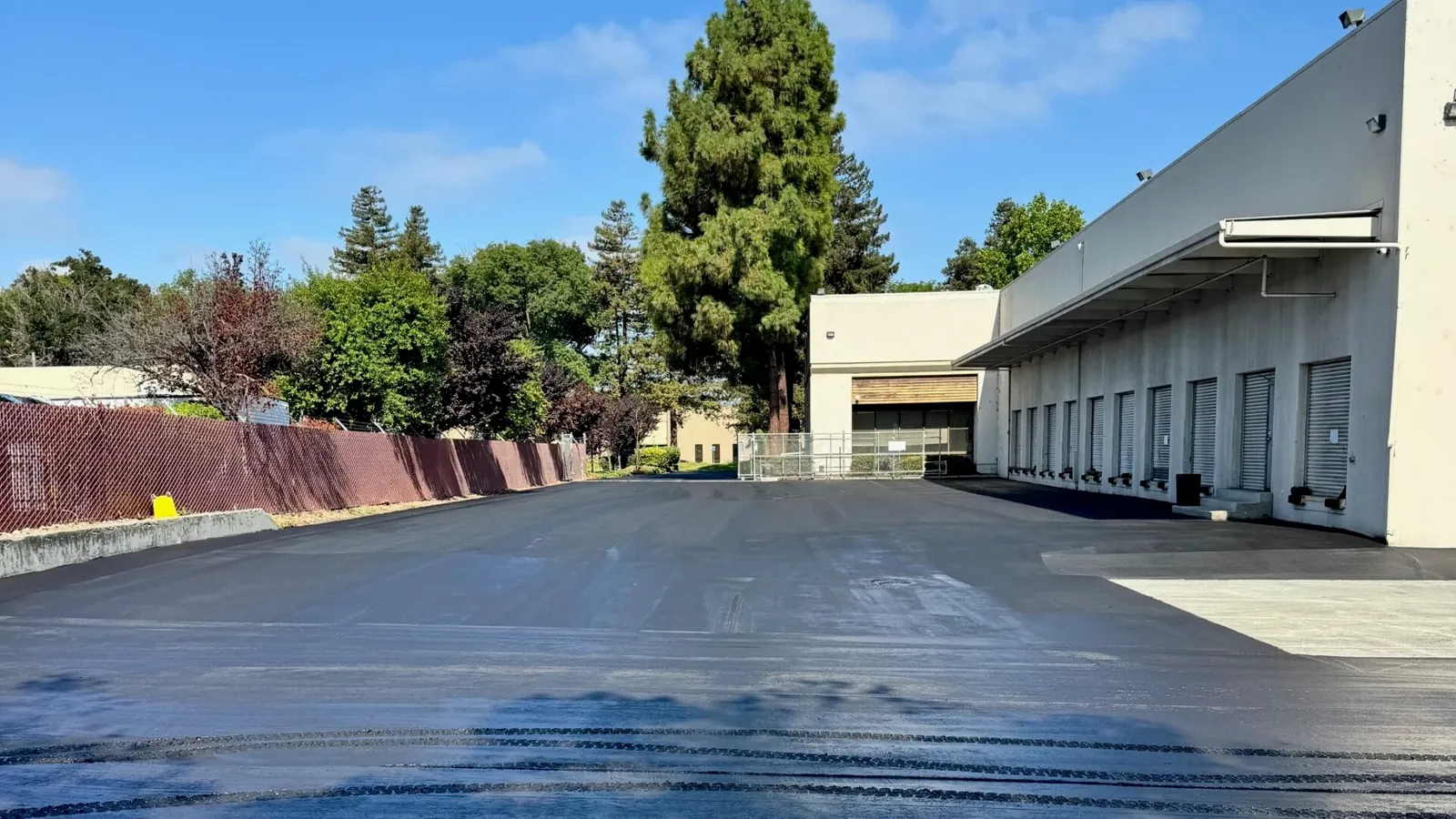
- Color: Cured sealer is uniform deep black. Wet/uncured sealer can appear shiny or have visible streaks.
- Smell: Strong solvent smell means it's still off-gassing — give it more time.
If you’ve just had your driveway sealed, one of the first questions that comes to mind is: how long should I stay off the driveway after sealcoating? The answer isn’t always one-size-fits-all—it depends on weather, temperature, and how you plan to use the surface. Staying off too soon can leave permanent marks, shorten the lifespan of the sealcoat, and waste your investment.
In this guide, we’ll cover the general timeline, key factors that affect drying, and tips to make sure your driveway cures properly.
The General Rule of Thumb
Most homeowners should plan to stay off a freshly sealcoated driveway for at least 24 to 48 hours. During this time, the sealant is curing—hardening into a durable protective layer. While the surface may look dry after a few hours, walking or driving on it too soon can scuff or damage the finish.
Factors That Affect Drying Time
Not all driveways cure at the same pace after sealcoating. While the general rule is to wait 24–48 hours before driving on your pavement, several factors can speed up or slow down the process. Everything from the weather outside to the type of sealant used plays a role in how long it takes your driveway to fully harden. Understanding these factors will help you set realistic expectations, avoid early traffic that damages the surface, and get the most out of your sealcoating investment.
Weather Conditions
Weather is the single biggest factor that determines how long you need to stay off your driveway after sealcoating. Sunny and warm (70°F–90°F) conditions are the ideal conditions for sealcoating. Warm temperatures and direct sunlight help the sealant cure evenly and quickly. In these conditions, homeowners can usually expect the driveway to be safe for light foot traffic within 24 hours, with full curing for vehicle traffic around 36–48 hours. If your driveway gets steady sun exposure throughout the day, it may even fall on the shorter end of that range.
When temperatures dip below 70°F or the air is humid, the curing process slows significantly. Humidity prevents water in the sealant from evaporating as quickly, leaving the surface tacky for longer. In these conditions, you should plan to wait at least 48–72 hours before driving on your driveway, and sometimes even longer if conditions are especially damp.
Rain is the sealcoating contractor’s biggest enemy. If it rains within 24 hours after sealant is applied, the water can wash away or streak the coating, leaving uneven patches or bare spots. Most contractors will reschedule jobs if rain is in the forecast, but homeowners should also monitor weather conditions to avoid surprises. If unexpected rain does occur, you may need touch-ups or a second coat.
2. Thickness of Application
A driveway with multiple coats will naturally take longer to dry than a single thin layer. When a single coat of sealant is applied evenly, it tends to cure faster—often within the standard 24–48 hour timeframe. Thin coats allow air and heat to reach the sealant more effectively, speeding up the hardening process.
If your driveway requires two coats, the drying process takes longer. Each layer must dry before the next can be applied, and the total curing time for both layers can extend the wait period to 72 hours or more. While multiple coats provide stronger long-term protection, homeowners should plan ahead to ensure they won’t need driveway access for several days.
3. Shaded vs. Sunny Areas
Areas under trees, next to buildings, or consistently in the shade will dry more slowly. These cooler spots don’t benefit from direct sunlight, which means the sealant may remain tacky even if the rest of the driveway appears dry.
By contrast, areas in full sun usually cure much faster. This unevenness can trick homeowners into thinking the entire driveway is ready when only certain parts are. It’s best to judge your wait time based on the slowest-drying areas, not just the sunniest spots.
4. Type of Sealant Used
Different formulas (coal tar, asphalt emulsion, or eco-friendly alternatives) have varying curing times. Your contractor should advise you based on the specific product applied. Known for their durability, coal tar-based sealants can be more resistant to weather and chemicals but may take a little longer to dry fully.
These water-based products are considered more eco-friendly and often have faster drying times. They’re also less odorous than coal tar options, making them more homeowner-friendly. With more homeowners looking for sustainable solutions, some contractors use newer, low-VOC (volatile organic compound) sealers. These may require slightly longer curing times but are safer for families, pets, and the environment.
Foot Traffic vs. Vehicle Traffic
One of the most common mistakes homeowners make after sealcoating is assuming the driveway is ready as soon as it looks dry. While the surface may appear firm after several hours, the sealant beneath the surface may still be curing. That’s why it’s important to distinguish between when it’s safe for walking and when it’s safe for vehicles.
Walking on a Freshly Sealed Driveway
In good weather conditions, most driveways can handle light foot traffic after about 24 hours. This means it’s usually safe to walk to your front door, retrieve mail, or bring in packages. However, even foot traffic can leave scuffs, shoe prints, or dirt marks if the surface isn’t fully cured. To minimize risk:
- Avoid dragging items (trash cans, strollers, bikes) across the surface until it’s completely hardened.
- Keep children and pets off the driveway, since their toys or claws can mark the soft sealant.
- If you must walk on the driveway, stick to edges that tend to dry faster in direct sunlight.
Driving and Parking on a Sealed Driveway
Vehicle traffic requires much more caution. Tires put significant pressure on asphalt, and heavy loads can cause ruts, peeling, or even remove portions of the seal if the surface isn’t cured. As a rule of thumb:
- Wait at least 48 hours before driving on your driveway after sealcoating if weather conditions are sunny and warm.
- In cooler or humid weather, extend the waiting period to 72 hours or longer to be safe.
- Avoid turning your steering wheel sharply while parked or backing out, since this twisting motion can tear the surface if it’s still soft.
- Try not to park in the same spot repeatedly during the first week, as concentrated weight can damage uncured areas.
Heavier Loads and Special Considerations
- Trucks, trailers, and RVs: Larger vehicles should stay off the driveway for a minimum of 72 hours, even in perfect weather, as their weight magnifies the risk of damage.
- Hot tires in summer: Asphalt can soften slightly under extreme heat. Driving too soon after sealcoating, especially on hot days, increases the chance of tire impressions.
- Newly paved driveways: If your driveway is brand new and sealcoated for the first time, consider extending the wait even longer. New asphalt retains heat and oils, slowing the curing process.
How Long to Stay Off Driveway After Sealcoating
So, how long should you stay off your driveway after sealcoating? In most cases, 24–48 hours for walking and 48–72 hours for driving is the safest bet. But remember, weather, shade, sealant type, and vehicle weight all play a role in curing time. The longer you wait, the better the results will be. By giving your driveway the proper time to dry, you’ll protect the sealant, extend the lifespan of your pavement, and ensure your investment pays off for years to come. Sealcoating is one of the most effective and affordable ways to protect your asphalt driveway—but only if you allow it to cure properly.